

Description
Why 66.7kW Is Becoming the Default Building Block for 1000V EV Charging Piles
Procurement teams specifying 1000V DC fast-charging piles now face a crowded field of rectifier modules, and the choice is rarely made on price alone. According to the International Energy Agency’s Global EV Outlook 2025, the global public charging fleet needs to grow roughly six-fold by 2030 to keep pace with EV sales, with high-power DC chargers above 150kW representing the fastest-growing segment. That growth pushes buyers toward modules that scale cleanly: a 66.7kW module filling a 320kW pile in five slots, or a 400kW pile in six, without re-engineering the cabinet each time the power target changes.
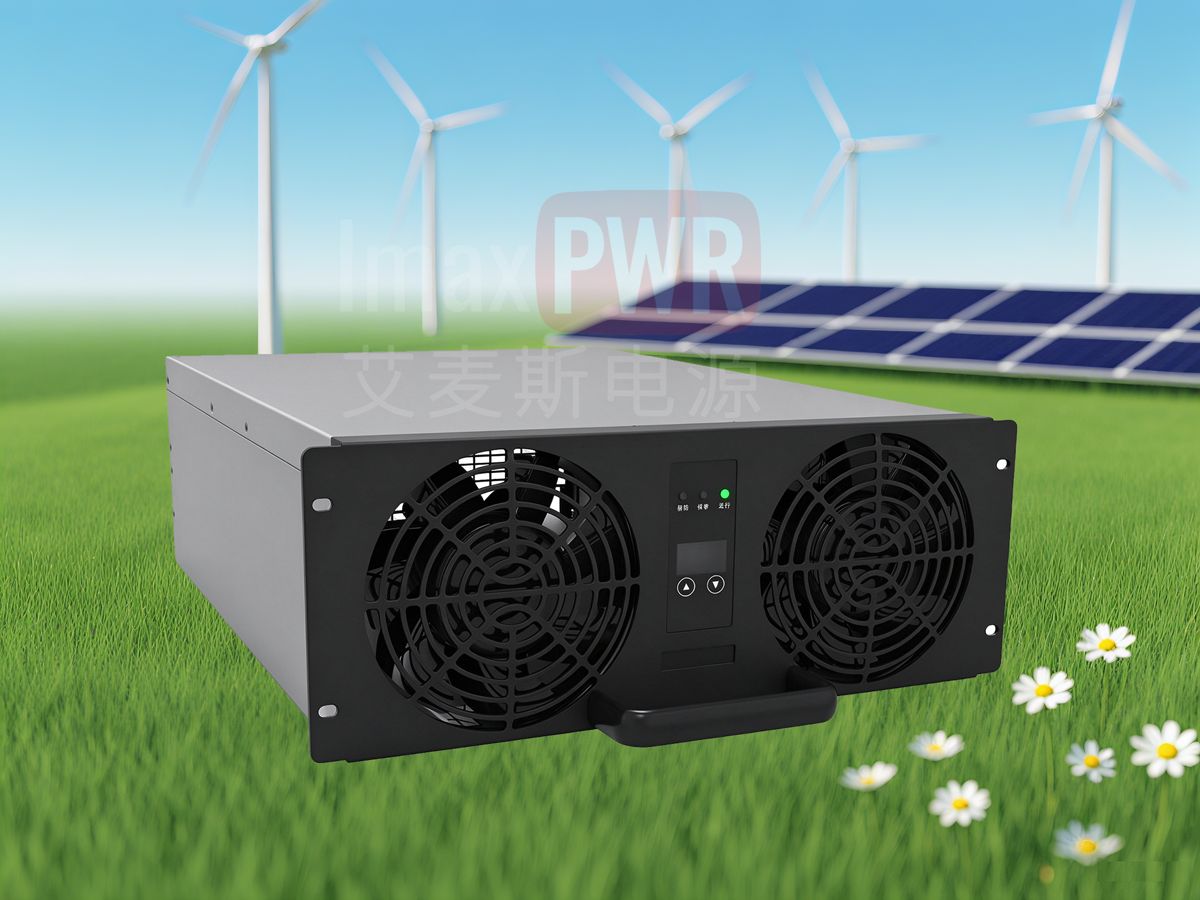
The SEG1K0210D is ImaxPWR’s answer to that requirement — a 66.7kW rectifier module delivering 1000V at up to 210A from either a three-phase 380Vac grid feed or a 660Vdc DC bus. This guide walks through the selection criteria that matter for a charging-pile rectifier, where this module performs against each, and which buyers it does and does not suit.
How to Specify a Charging Pile Rectifier: Five Criteria That Decide the Purchase
When comparing charging modules, five technical dimensions separate a module that survives eight years in a highway corridor from one that returns for service in eighteen months.
1. Output voltage window vs. the installed battery base
A charging pile purchased today will still be in service when 800V and 1000V vehicle platforms dominate. A module with a narrow constant-power band forces early replacement; a wide one does not. The SEG1K0210D holds full 66.7kW output from 318Vdc to 1000Vdc, and its current-limited range extends down to 50Vdc at up to 210A — covering legacy 200V packs and next-generation 1000V platforms from the same hardware.
2. Conversion efficiency at the operating point, not at the datasheet peak
Peak efficiency figures are measured at one optimal load point. What matters financially is efficiency across the daily duty cycle. The SEG1K0210D reaches 97.5% peak on AC input and 98% peak on DC input; its wide constant-power band keeps efficiency high through the mid-load range where most charging sessions actually sit.
3. Input flexibility for constrained sites
Not every site has a clean 380Vac feed. Brownfield locations, DC-coupled solar-storage-charging sites, and battery-buffered stations increasingly supply DC directly. The SEG1K0210D accepts both AC (323–490Vac at full load) and DC (570–850Vdc at full load) inputs and selects the appropriate path automatically.
4. Standby and no-load losses
An idle charging pile still draws power. For a 6-module pile idling 60% of the day, standby consumption accumulates across the year. The SEG1K0210D draws under 7W at normal standby and can be driven to a true 0W state via an external relay pulse (12V/1A, 100–200ms), eliminating no-load loss entirely between sessions.
5. Fault isolation and serviceability
A single failed module should not take down the pile. The SEG1K0210D isolates a failed unit from the DC bus automatically while the remaining modules continue at reduced capacity — a design that keeps the charger operational and confines replacement to one slot.
SEG1K0210D Technical Specifications
DC Output
| Parameter | Value |
|---|---|
| Rated output power | 66.7kW |
| Output voltage range | 50Vdc – 1000Vdc |
| Constant-power range | 318Vdc – 1000Vdc (full 66.7kW) |
| Output current range | 0 – 210A (ambient ≤55°C) |
| Rated output | 1000V @ 66.7A |
Input
| Parameter | Value |
|---|---|
| AC input (rated) | Three-phase 380Vac |
| AC input range | 323 – 490Vac (full load); 323 – 270Vac linear derating to half load |
| DC input (rated) | 660Vdc |
| DC input range | 570 – 850Vdc (full load) |
| Input current | AC <120A; DC <130A |
| Input frequency | 45 – 65Hz |
Efficiency & Power Quality
| Parameter | Value |
|---|---|
| Peak efficiency (AC input) | 97.5% |
| Peak efficiency (DC input) | 98% |
| Power factor | ≥0.99 |
| THD | ≤5% |
| Standby consumption | <7W active / <15Var reactive; 0W / 0Var in zero-standby mode |
Environment, Mechanical & Reliability
| Parameter | Value |
|---|---|
| Dimensions (W×H×D) | 300 × 125 × 437.5mm (336 × 125 × 475.5mm with brackets/handle) |
| Net weight | ≤23kg |
| Operating temperature | −40°C to +55°C full load; +55°C to +75°C derated |
| Storage temperature | −40°C to +75°C |
| Humidity | 0 – 95% (non-condensing) |
| Altitude | Up to 2000m |
| Noise | ≤63dB |
| Dielectric strength | Input/output to enclosure: DC 3535V/1min; input/output to communication: DC 4300V/1min |
| MTBF | >120,000 hours |
| Communication | CAN |
| Safety standards | IEC 61851-1:2017, IEC 61851-23:2023, EN IEC 61851-1:2019, EN 61851-23:2014; NB/T 11864—2025 |
Where the SEG1K0210D Fits — and Where It Does Not
Specify the SEG1K0210D when:
- You are building 1000V DC fast-charging piles in the 200–400kW class. Five modules make a 320kW pile; six make a 400kW pile. Module count is the only variable.
- Your sites mix AC and DC supply. Sites with on-site battery buffers or DC-coupled solar can feed the DC input directly and avoid an AC conversion stage.
- Your installed base spans multiple battery voltages. The 50–1000V output window covers 200V legacy packs and current 800V/1000V platforms without a module change.
- Standby cost matters at scale. For operators running dozens of piles, the 0W zero-standby mode removes a measurable annual consumption line.
- Your environment is harsh. The −40°C to +75°C range and 2000m altitude rating suit hot, cold, and high-altitude corridors across Southeast Asia, the Middle East, Africa, and Latin America.
Look elsewhere when:
- You need bidirectional (V2G) operation. The SEG1K0210D is a unidirectional rectifier. For V2G or bidirectional storage, ImaxPWR’s bidirectional AC/DC and DC/DC series are the correct fit.
- Your target pile is below 100kW and cost-driven. At low power, smaller-form-factor modules with a narrower output window can be more economical per kW.
- You require liquid cooling. This module is air-cooled; liquid-cooled applications need a different platform.
- You are building a single small charger with no scaling plan. The module-count flexibility pays off across a fleet, less so for a one-off installation.
Design Notes for Charging Pile Integration
The module’s 300 × 125mm faceplate is designed for standard pile slots, with the 437.5mm insertion depth (475.5mm with handle) matching common 19-inch-style charging-pile racks. Power density reaches roughly 3.6kW/L, which reduces cabinet footprint versus same-power modules that rely on larger heat sinks.
On the control side, the CAN interface carries output voltage/current setpoints, status, and fault flags; each module reports independently so the pile controller can shed a failed unit and rebalance the rest. The internal topology is an AC-input stage feeding a DC bus that also accepts direct DC input, followed by an isolated DC/DC conversion stage delivering the regulated 50–1000V output — a structure that lets the same hardware operate from grid or DC bus without a mechanical switchover.
Protection coordinated in the module includes output overvoltage/overcurrent, input undervoltage/overvoltage, over-temperature, and short-circuit protection, with the failed-module self-isolation described above. The 3535V/4300V dielectric strength margins support charging-pile builds targeting IEC 61851-23 compliance — the standard covering DC charging stations. Buyers should note that final station-level certification is the pile integrator’s responsibility; the module is a component certified to the listed standards.
Total Cost of Ownership: What the Numbers Look Like Over Five Years
For a procurement decision, the purchase price per module is only the first line. Three cost drivers separate a low-price module from a low-cost-of-ownership one.
Energy loss at the operating point. A module running at 97.5% peak efficiency loses 2.5% of throughput as heat. Across a pile delivering, for example, 200MWh per year, the difference between a 97.5% and a 96% module is roughly 3MWh of wasted energy annually — at commercial tariffs in Southeast Asia or Latin America, that is a recurring cost that compounds over the asset’s life. The SEG1K0210D’s 98% peak on DC input and wide constant-power band keep losses low across the daily duty cycle, not at a single datasheet point.
Standby consumption. A pile with six modules idling six hours a day draws standby power for 2,190 module-hours annually. At under 7W normal standby, that is about 15kWh per module per year; the zero-standby mode drops it to zero. The saving is modest per unit but multiplies across a fleet — the arithmetic that matters to operators running dozens or hundreds of piles, and the reason zero-standby switching has moved from a premium feature to a specification line.
Service and downtime. The failed-module self-isolation design limits a fault to one slot: the pile continues at reduced power, the operator swaps a single 23kg module rather than replacing a monolithic power unit, and the vehicle charging session in progress is less likely to be interrupted. For high-utilization corridors, avoided downtime is often the largest hidden cost, and a modular architecture is what makes it avoidable. According to the World Bank’s energy practice, grid infrastructure investment in emerging markets increasingly favors modular, field-serviceable equipment precisely because downtime costs dominate lifecycle economics in regions where skilled service labor is scarce.
None of these three drivers shows up in a like-for-like price comparison, which is why specifying on upfront cost alone tends to underperform over a five-year horizon. Buyers evaluating modules for a fleet rollout should request efficiency curves across the load range, standby figures at each power state, and the fault-isolation behavior — the three data points that map most directly to total cost of ownership.
Frequently Asked Questions
What is the maximum output current of the SEG1K0210D?
210A, available across the current-limited range below 318Vdc at ambient temperatures up to 55°C. Above 318Vdc the module operates in constant-power mode at 66.7kW.
Can it run from a DC bus instead of an AC grid?
Yes. It is a dual-input module accepting either three-phase 380Vac (323–490Vac full-load range) or 660Vdc (570–850Vdc full-load range), selecting the active source automatically.
What is the difference between normal standby and zero standby?
Normal standby draws under 7W active and 15Var reactive. In zero-standby mode, an external 12V/1A relay pulse (100–200ms) fully disconnects the module, bringing consumption to 0W and 0Var until the next charge session.
How many modules do I need for a 320kW charging pile?
Five SEG1K0210D modules in parallel deliver 333.5kW nominal, covering a 320kW pile with margin. A 400kW pile uses six modules. Modules share load and isolate individually on fault.
Does it support V2G or bidirectional operation?
No. The SEG1K0210D is a unidirectional rectifier for charging. For V2G or bidirectional storage applications, ImaxPWR’s bidirectional AC/DC and DC/DC module families are the appropriate choice.
Related Products
- SEG1K0315S2 — 40kW DC Charging Module — lower-power module in the same SEG 1000V family, for 100–200kW piles.
- IMDC100040 — 40kW DC Charging Module for PV-Storage-Charging — adds MPPT for solar-coupled charging sites.
- SEG1K0100 — Isolated Unidirectional AC/DC Charging Module — entry point of the SEG 1000V series.
- Charging Module / Voltage Stabilizing Power Supply Series — full SEG and companion module range.
About the Author
Ethan Li is an energy storage systems engineer at ImaxPWR Power Co., Ltd., with years of experience in PCS, DC/DC converters, BESS, and microgrid design. He has participated in multiple domestic and international energy storage projects in solution design and technical support. ImaxPWR is a National High-Tech Enterprise and a source manufacturer of integrated energy storage products and system solutions.
Reviewed by Ethan Li.
About ImaxPWR & Contact
ImaxPWR Power Co., Ltd. is a National High-Tech Enterprise specializing in new energy, delivering integrated energy storage products and system solutions as a source manufacturer. Founded in 2019 and headquartered in Shenzhen, China, the company covers bidirectional converters, DC/DC, energy management, and energy storage cabinet integration, providing design, delivery, and O&M services. Its R&D team comes from State Grid, XJ Group, Emerson, and Kehua Tech.
Request the full datasheet or a customized configuration for this product — contact us directly.
Contact: COCO
Tel / WhatsApp: +86-13760212825
Email: info@imaxpwr.com
Website: https://imax-pwr.com
© 2026 ImaxPWR Power Co., Ltd. · Product introduction article. Specifications from the SEG1K0210D technical manual; standards references from IEC and NB/T published documents.