

5 Benefits of DC Coupling in Commercial Solar-Storage Microgrids
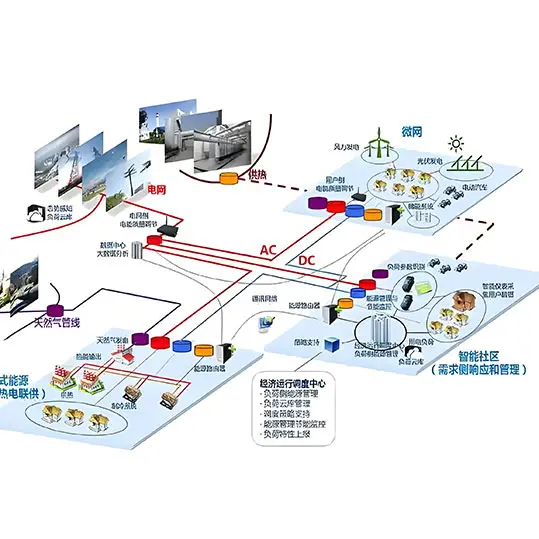
When designing a commercial solar-storage microgrid, one of the most fundamental architectural decisions you’ll make is whether to use AC coupling or DC coupling for your photovoltaic and battery BESS system. Both architectures have their place, but DC coupling is increasingly becoming the preferred choice for many new commercial and industrial microgrid projects due to several key advantages.
In this article, we explore the five primary benefits of DC coupling in commercial solar-storage microgrids and explain why this architecture is gaining popularity among system designers and project developers.
1. Higher Overall Efficiency from Reduced Conversion Losses
The most significant advantage of DC coupling is higher system efficiency due to fewer power conversion steps. In a DC-coupled system, solar panels generate DC power that charges the battery directly through a DC-DC converter, without needing to convert it to AC first and then back to DC for storage.
Each power conversion step (DC to AC or AC to DC) incurs some energy loss, typically 2-5% per conversion depending on the equipment quality. By eliminating one full conversion cycle compared to AC coupling, DC coupling improves round-trip efficiency by approximately 3-7%. This translates directly to more usable energy from your solar panels and higher overall project returns.
Over the 20+ year lifetime of a typical commercial microgrid, this efficiency improvement adds up to significant energy and financial gains. For larger systems with multi-megawatt solar capacities, the total energy gained from higher efficiency can be substantial.
2. Better Utilization of Solar Generation
DC coupling allows your battery to charge directly from solar generation when excess solar energy is available, with minimal losses. During periods of high solar irradiance and low on-site load, all the extra solar energy can be efficiently captured and stored in the battery for later use.
In an AC-coupled system, the inverter capacity often limits how much excess solar can be diverted to battery charging, especially when the load is low. Some AC-coupled designs actually require curtailing solar generation when the battery is being charged because of inverter rating limits. DC coupling eliminates this wasted solar potential.
This improved solar utilization is particularly valuable in commercial microgrids because most businesses have daytime load profiles that don’t match perfectly with solar generation. The extra energy captured through DC coupling increases self-consumption and reduces the need to purchase power from the grid.
3. Lower Capital Cost for Integrated Systems
DC-coupled architectures can actually reduce upfront capital costs when designed properly. By using a centralized PCS for the battery and integrated DC-DC converters for the solar array, you can sometimes eliminate the need for individual string inverters or microinverters for the PV array.
The cost savings from eliminating redundant power conversion stages can offset any additional cost of the DC coupling infrastructure. While the exact cost comparison depends on the specific project design and equipment choices, many DC-coupled systems achieve a lower upfront capital cost per kWh than equivalent AC-coupled designs.
Additionally, DC coupling simplifies system balance-of-plant requirements because you’re combining the solar and battery interconnections at the DC level before the main grid-tie inverter. This can reduce wiring, switchgear, and protection system complexity.
4. Improved Voltage and Frequency Stability
DC-coupled microgrids offer superior stability characteristics when operating in islanded mode (off-grid). Because the battery and solar are connected on the common DC bus, the battery can respond extremely quickly to fluctuations in solar output without needing to coordinate through multiple AC-side inverters.
This fast response capability helps maintain voltage and frequency stability more effectively, especially with high penetrations of solar generation. When cloud cover passes over the PV array and generation drops suddenly, the battery can pick up the slack instantly from the DC bus, avoiding disruptive voltage/frequency deviations that could trigger protection trips.
For commercial microgrids that need to maintain reliable power for sensitive loads, this improved stability is a major advantage. It reduces the risk of load shedding or system collapse during transient generation fluctuations in islanded operation.
5. Greater Flexibility for Future Expansion
DC-coupled architectures offer excellent flexibility for incremental expansion of both solar and storage capacity. Because you have a common DC bus that both solar and battery connect to, it’s generally easier to add more PV capacity or additional battery modules without needing to completely rework the power conversion infrastructure.
Many modern DC-coupled systems use modular power-router designs that allow you to scale up capacity in manageable stages as your energy needs grow. This modularity aligns well with the trend towards phased project development where businesses expand their microgrids as their energy demand increases or as economics improve.
This expansion flexibility is particularly valuable for commercial projects where future energy needs might be uncertain or where capital constraints favor phased investment. You can start with a smaller initial system and add capacity later without stranding your initial investment in power conversion equipment.
When Does AC Coupling Still Make Sense?
While DC coupling offers these five compelling advantages, it’s not always the best choice for every project. AC coupling still works well for retrofits where you’re adding battery storage to an existing solar installation that already has AC inverters. In retrofit situations, AC coupling avoids the need to rework the existing solar interconnection, which simplifies installation and reduces disruption.
The choice between DC and AC coupling ultimately depends on your specific project characteristics:
- New build greenfield projects: DC coupling is usually preferred for maximum efficiency and solar utilization
- Retrofit existing solar with new storage: AC coupling is often more practical and cost-effective
- Multiple distributed generation sources: Hybrid architectures can sometimes combine the best of both approaches
Conclusion: DC Coupling Grows in Popularity for New Projects
For new commercial solar-storage microgrids, DC coupling delivers clear benefits in efficiency, solar utilization, stability, and often capital cost. As the industry gains more experience with this architecture and component costs continue to decline, we expect DC coupling to become the dominant architecture for most new commercial microgrid projects.
The five benefits we’ve discussed – higher efficiency, better solar utilization, lower capital cost, improved stability, and greater expansion flexibility – add up to a compelling case for considering DC coupling for your next commercial microgrid project. Working with an experienced system integrator that understands both architectures helps you make the right choice for your specific circumstances.
About Imaxpower
IMAX (Shenzhen) Power Technology Co., Ltd. is a national high-tech enterprise specializing in power conversion solutions for microgrids and energy storage. Our modular PCS and solution architectures support both AC-coupled and DC-coupled designs, allowing us to deliver the optimal architecture for each customer’s specific requirements.
If you’re planning a commercial solar-storage microgrid project and want to discuss whether DC coupling is right for your application, our engineering team is here to help. Contact us today to share your project details:
📱 Phone/WhatsApp: +86-13760212825
📧 Email: info@imaxpwr.com
We look forward to helping you design an efficient, cost-effective microgrid that meets your energy needs and delivers excellent long-term returns.