

🔋 Brought to you by Imax Power – your trusted partner in advanced energy solutions.
Blade Battery Gen 1 vs Gen 2: A Complete Breakdown
1. First, Understand the Core Difference
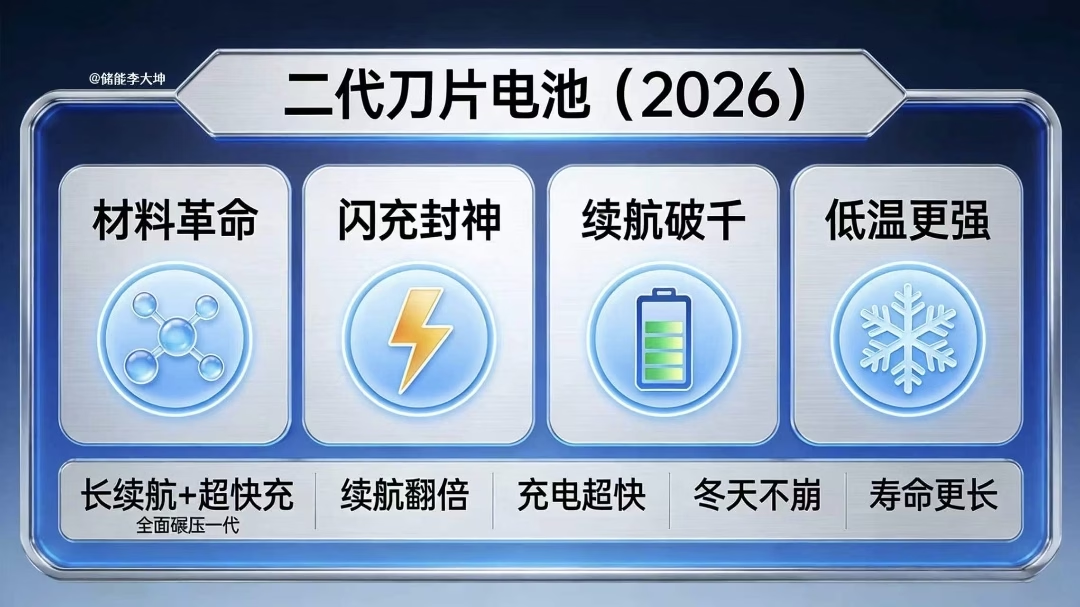
Gen 1: LFP (Lithium Iron Phosphate). Super safe, cheap, durable. Weak in range, fast charging, and cold weather.
Gen 2: LMFP (Lithium Manganese Iron Phosphate) + silicon-carbon anode. Higher voltage, more energy. A true all-around upgrade.
Gen 1: 140 Wh/kg
Gen 2: 190–210 Wh/kg
→ stores nearly 50% more energy in the same space.
Gen 1: 30+ minutes
Gen 2: 5 min to 70%, 9 min to nearly full
→ charges as fast as refueling a gas car.
Gen 1: loses 30–40% of range
Gen 2: loses less than 15% at -20°C
→ works reliably in northern regions.
Gen 1: 3,000 cycles
Gen 2: over 4,500 cycles
→ the more you use it, the more you save.
Gen 1 is a safe, reliable battery for home use.
Gen 2 maxes out range, charging speed, and cold weather ability.
2. Which Cars Use These Batteries? (Easy View)
🔹 Gen 1 Blade Battery
Mainstream models, 10k–20k USD
- BYD Qin PLUS EV
- BYD Yuan PLUS
- BYD Dolphin
- Older Han / Tang
- BYD Song Pro EV
Key strengths: cheap, stable, good for daily commuting.
🔹 Gen 2 Blade Battery
15k to over 100k USD (premium & flagship)
- Yangwang U7 / U8
- Denza Z9GT
- BYD Song Ultra
- BYD Sealion
- BYD Seal
- Fangchengbao Flash Charge Edition
Key strengths: 1,000 km range, 9‑minute flash charge, reliable in cold climates.
Bottom line: Gen 1 covers mass market needs. Gen 2 leads the premium segment. Both will coexist for years.
3. Global Ranking: How Strong Is Blade Battery?
In the global LFP race, Blade Battery stands in the top tier. It directly competes with Tesla, CATL, and Japanese/Korean giants.
🆚 vs. Tesla 4680
Tesla 4680: slightly higher energy density, but expensive, weak in cold, shorter life, higher safety risk.
Gen 2 Blade: crushes it in flash charging, beats it in cold weather, doubles cycle life, costs 40% less, and is much safer.
Verdict: For family use, long trips, or cold regions – Blade wins across the board.
🆚 vs. CATL
CATL’s Kirin battery focuses on high‑nickel NMC.
Blade Gen 2 uses LFP chemistry but delivers NMC‑like experience.
Result: lower cost, much safer, and nearly the same performance.
🆚 vs. LG and Panasonic (Japan/Korea)
They rely on high‑nickel NMC for premium EVs.
Gen 2 Blade matches their performance, costs far less, and offers better safety and durability.
It’s a classic disruptive move.
🆚 vs. Solid‑State & Sodium‑Ion
Solid‑state: too early, too expensive.
Sodium‑ion: lacks energy density.
Gen 2 Blade is the most stable, best solution from 2026 to 2030. It’s mature, producible at scale, and highly capable.
4. Why Does This Matter? (Outsider’s View)
- For ordinary people: Old EV anxieties (range, charging, cold weather). Gen 2 Blade solves all three at once. A 15k USD car now offers a 100k USD experience. True EV democratization.
- For the EV industry: People once believed premium EVs must use NMC batteries. Blade proves that LFP chemistry can also go high‑end. It breaks technical monopoly and creates a safer, more diverse path.
- For our industry (China’s tech export): This is not just a battery. It’s a global technology passport. Blade Battery plants operate in Saudi Arabia. Global supply chains use it. China moves from selling cars to selling technology, standards, and ecosystems.
- For global carbon neutrality: Cheaper, longer‑lasting, safer batteries make EVs affordable worldwide. Blade Battery offers a low‑cost carbon‑neutral solution – made in China, shared with the world.
5. Final Takeaway
Gen 1 Blade Battery redefined safety.
Gen 2 Blade Battery redefines the entire EV experience – range, charging, cold weather, and value.
It is more than a battery. It is the confidence of Chinese technology standing firm on the global stage.