

High-Altitude BESS Deployment: How We Delivered 8 Units of 125kW/261kWh Liquid-Cooled Storage for a Distribution Grid in Qinghai
🏔️ Project Background & Requirements
The project is located in a remote distribution grid (Tai District) in Qinghai Province, China, at an average altitude of 3,050 meters above sea level. The grid at this node suffers from severe voltage fluctuations during winter peak loads and has a weak connection to the main transmission network.
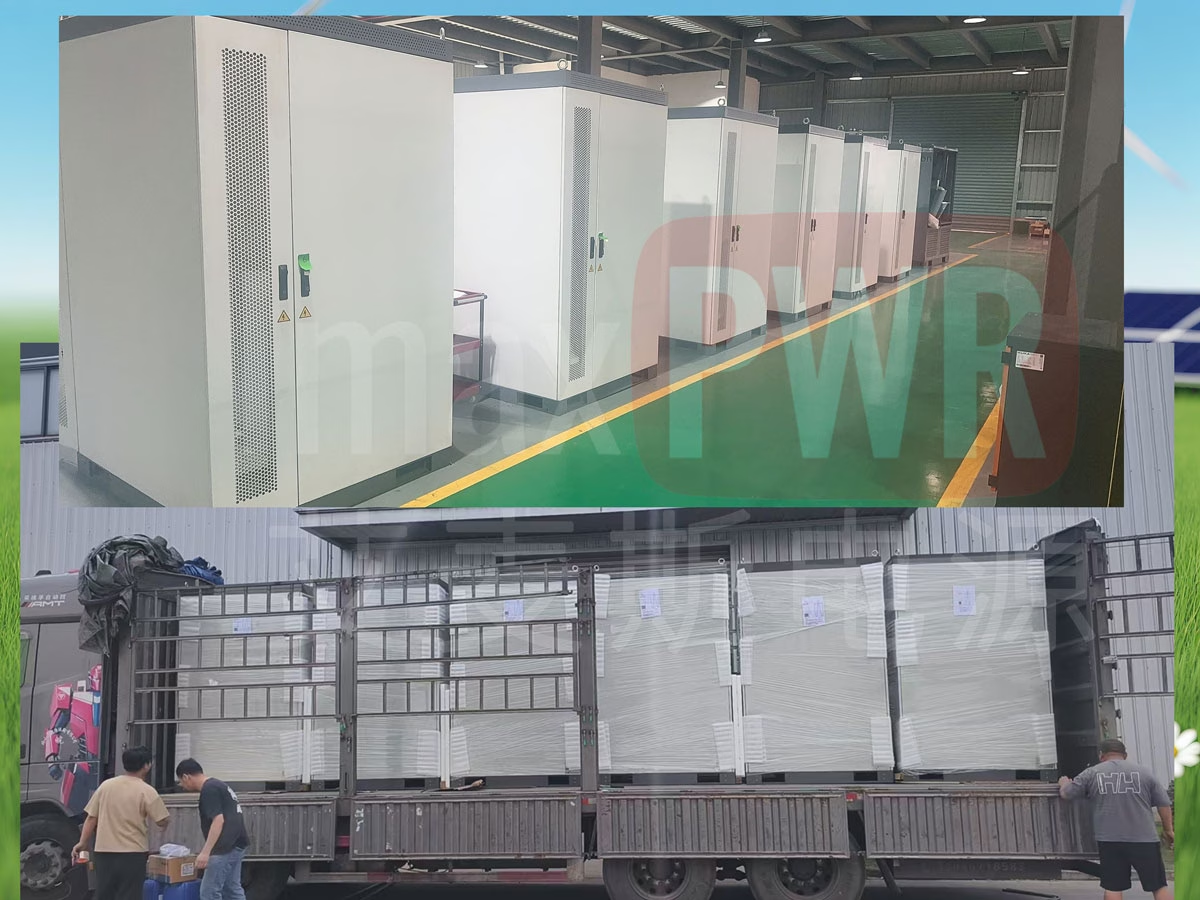
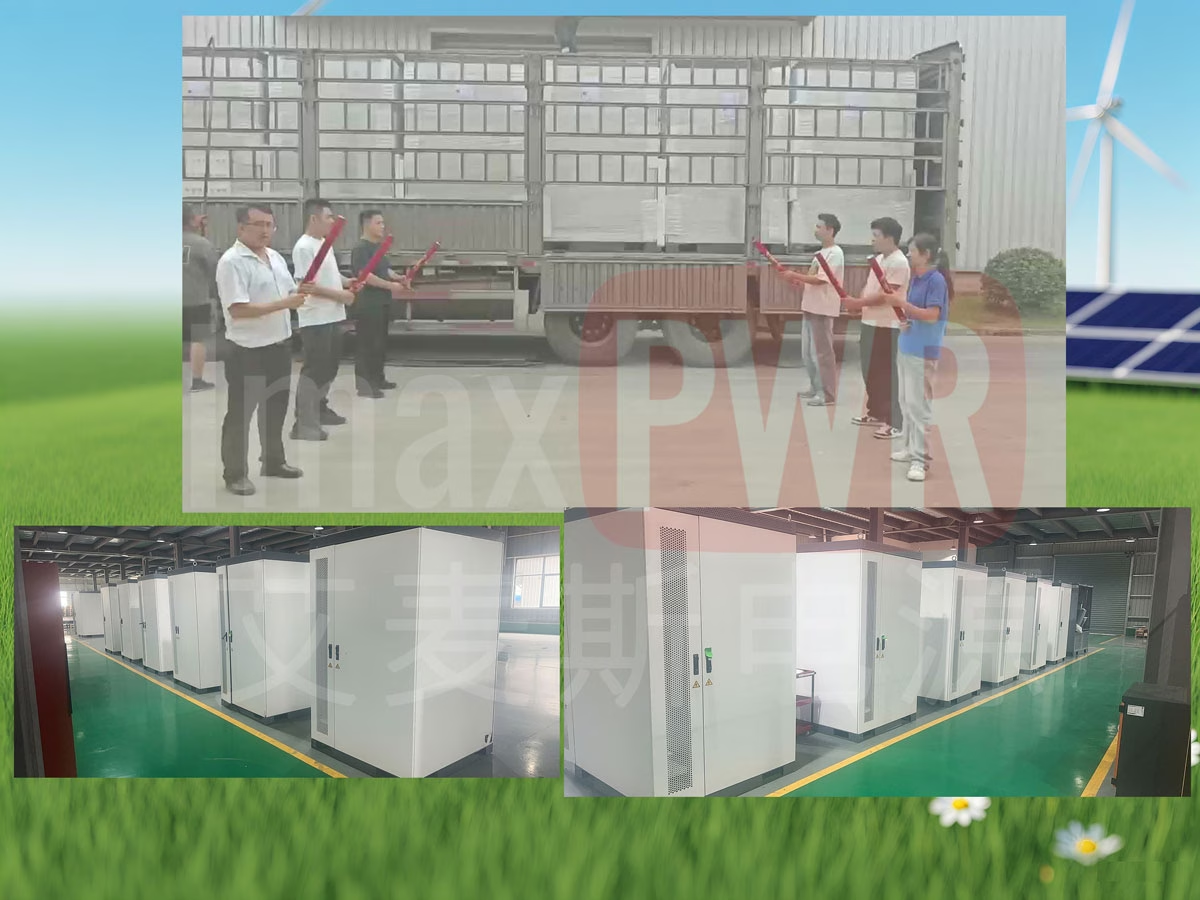
The local utility required a fast-response energy storage system to provide dynamic voltage support, peak shaving, and backup black-start capability. After a thorough site survey and load-flow analysis, the client specified a total capacity of ~1MW / 2MWh, to be delivered as 8 parallel-connected outdoor liquid-cooled cabinets.
- Target capacity: 8 × 125kW / 261kWh = 1,000kW / 2,088kWh (AC coupled).
- Primary functions: Peak shaving, voltage regulation, and seamless islanding (< 20ms transfer).
- Ambient conditions: Winter temperatures as low as -25°C, summer highs up to 30°C, with frequent sandstorms.
⚙️ Key Engineering Challenges
1. PCS Derating at High Altitude (> 3,000m)
Both the 125kW and 105kW IMAXPWR platforms specify derating above 2,000m. At 3,050m, air density drops by ~30%, reducing the convective cooling efficiency of the PCS’s forced-air heatsink. Without compensation, the rated 125kW PCS would lose approximately 12-15% of its nominal output.
2. Low-Temperature Battery Performance
Qinghai’s winter nights drop below -25°C. While LFP cells have a discharge temperature range down to -20°C, charging below 0°C is prohibited. The system must actively heat the battery PACKs before sunrise to enable solar-coupled charging cycles.
3. Parallel Coordination of 8 Cabinets
Eight AC-coupled cabinets share a common 400V low-voltage bus. Ensuring equalized power sharing and preventing circulating currents requires a robust EMS with sub-second communication latency and precise voltage-synchronization algorithms.
4. Fire Safety & Dust Protection
The site is exposed to fine sand and dust. The cabinets must maintain IP54 (or higher) integrity while the PACK-level perfluorohexanone fire system must be tested for reliable operation at sub-zero temperatures.
🔧 Our Engineering Solution
We selected the IMAXPWR 125kW/261kWh liquid-cooled platform for three strategic reasons:
- Headroom for derating: Even with a 15% altitude derating, the cabinet delivers ~106kW — nearly matching the 105kW platform’s nominal rating, but with a larger 261kWh battery for extended backup duration.
- Integrated PACK heating: The BMS supports external heater control via the liquid loop, enabling pre-heating from the grid or PV before charging cycles.
- AC-coupled parallel architecture: This inherently eliminates DC-side circulating currents, making it safe and simple to parallel up to 10 cabinets as standard.
📐 System Topology (AC-Coupled)
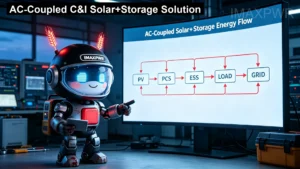
Grid 400V AC Bus ↔ 8× PCS (125kW each) ↔ 8× Battery Banks (261kWh each) ↔ EMS & Smart Meter
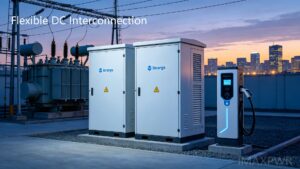
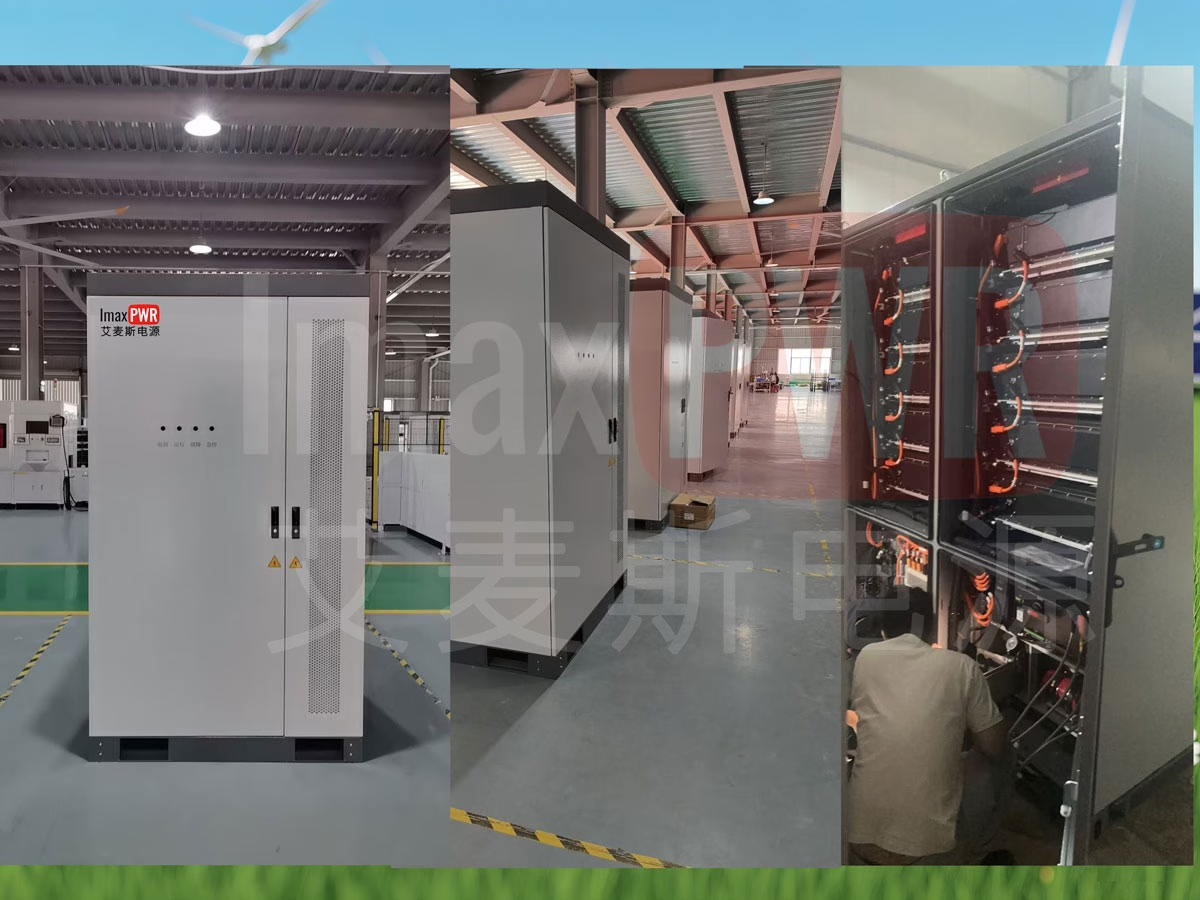
Each cabinet integrates STS, PCS, BMS, Fire Suppression, and Liquid Cooling autonomously.
Configuration Comparison & Decision Matrix
| Parameter | Standard 105kW Platform | Selected 125kW Platform (Qinghai) |
|---|---|---|
| Rated AC Power | 105 kW | 125 kW (derated to ~106 kW @ 3,050m) |
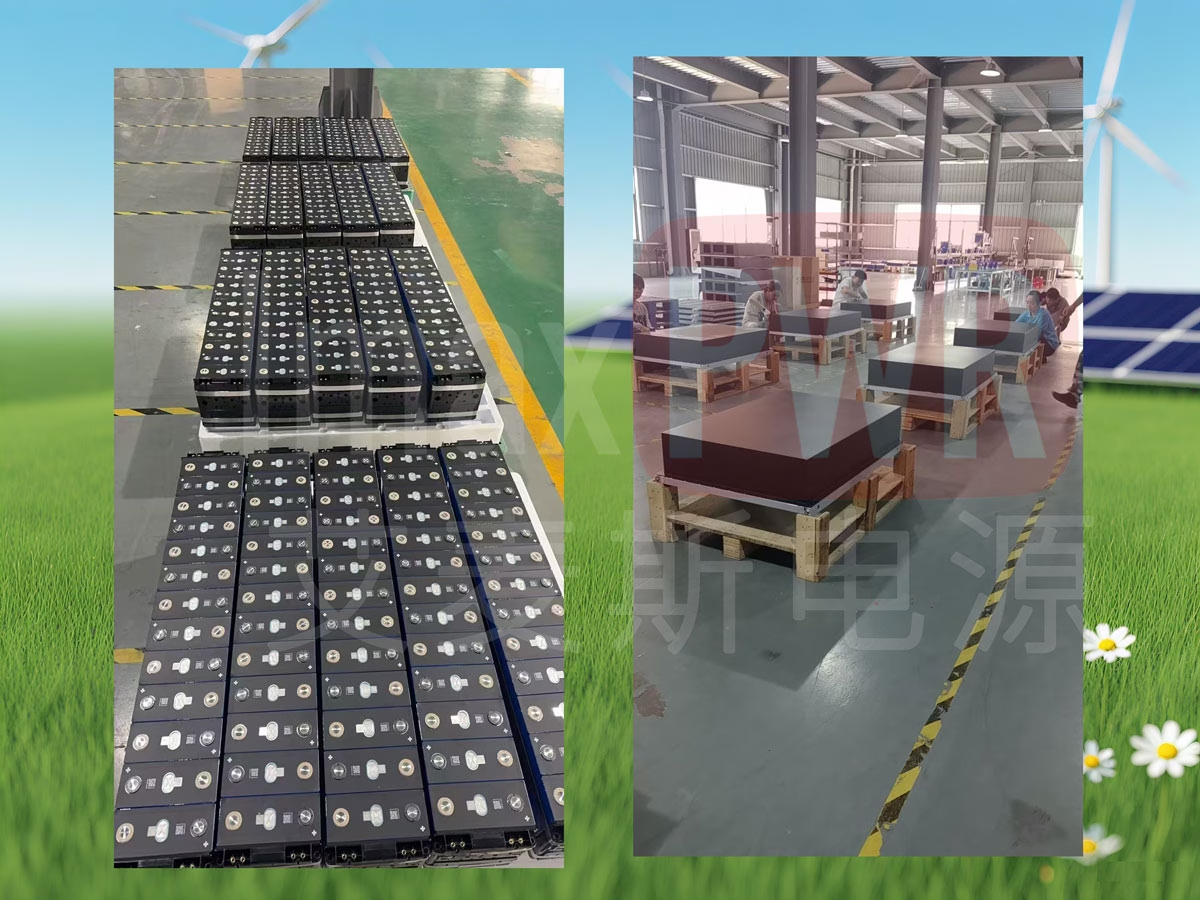
| Battery Capacity | 241.15 kWh | 261.25 kWh (8% more daily throughput) |
| PACK Configuration | 1P240S (768V) | 1P260S (832V) — higher voltage = lower current for same power |
| Protection | IP54 (whole) / PACK IP67 | IP55 (whole) / PACK IP67 — better dust ingress protection |
| Fire System | PACK-level perfluorohexanone | PACK + Cabin perfluorohexanone + water backup interface |
| Cycle Life | ≥ 6,000 cycles | ≥ 6,000 cycles @ 25°C, 0.5C, 90% DOD |
| Heating support | Optional | Standard (via liquid loop) |
📊 Field Data & Performance (Qinghai Site)
Project Note: Commissioning was completed in March 2026. The 8 cabinets are arranged in a single row with 800mm rear clearance for cable maintenance.
- Total usable capacity: 2,088 kWh (theoretical) / ~1,900 kWh (practical after derating and system auxiliaries).
- PCS output per cabinet: Steady 106-108 kW during peak periods, matching the 105kW baseline requirement.
- Voltage support: The local 10kV feeder voltage deviation improved from ±9% to ±3% during heavy load hours.
- Winter operation: The liquid heating loop successfully raised PACK temperatures from -25°C to +5°C within 90 minutes, enabling scheduled early-morning charging.
- System efficiency: Measured AC-to-AC round-trip efficiency = 87.2% (including chiller and heater auxiliaries).
Note: Performance data are site-specific. Actual results depend on load profiles, grid conditions, and maintenance practices.
🧠 Key Lessons Learned
- Always calculate altitude derating before sizing. At 3,000m, we lost ~15%. Specifying the 125kW platform instead of the 105kW gave us the “free” capacity to meet the tender requirements without increasing cabinet count.
- Pre-heating strategy matters. We programmed the EMS to use grid power (during off-peak hours) to heat the batteries from 02:00 to 04:00. This ensures the batteries are ready for the morning solar ramp without reducing available charge capacity.
- AC coupling is the clear winner for multi-cabinet sites. We observed zero circulating current between the 8 PCS units. The EMS handles power distribution with < 5% imbalance, well within design tolerances.
- Physical layout must consider dust. The IP55 rating on the selected platform proved critical. The standard IP54 cabinets required additional external filter covers, which added cost and maintenance overhead.
📩 Need a Similar System for Your High-Altitude or Distribution Grid Project?
Whether you need 1 cabinet or 10, our engineering team can design the optimal BESS solution based on your altitude, load profile, and grid code requirements. We provide full system simulation, PCS sizing, and ROI modelling.
Send us your project specs — we’ll propose a tailored engineering solution within 24 hours.
❓ Frequently Asked Questions
✍️ About the Author
15+ years in power electronics, PCS design, and microgrid integration. Ethan has personally overseen more than 20 high-altitude BESS deployments across western China.
🏢 About IMAXPWR
IMAX (Shenzhen) Power Technology Co., Ltd. (brand: IMAXPWR) is a national high-tech enterprise specializing in energy storage power conversion equipment. We are a professional OEM/ODM manufacturer and system solution provider for:
- Energy storage converters (PCS)
- Bidirectional DC/DC converters & V2G modules
- Energy storage cabinets & integrated BESS solutions
- Microgrid, PV-storage-charging, and C&I energy storage systems
Our R&D team — with backgrounds from State Grid, Emerson, and XJ Group — brings deep expertise in digital power and energy storage system engineering. All products are certified to CE, UL, and ROHS standards.
📞 Contact: Coco | +86-13760212825 | info@imaxpwr.com | imax-pwr.com
Note: This case study is based on actual project data from Qinghai, China. Performance metrics are site-specific and provided for illustrative reference. Always consult with a qualified engineer for your particular site conditions and regulatory requirements.