🛡️ What Exactly Does Redundancy Design Cover in Energy Storage Systems?
“Redundancy” sounds reassuring, yet redundant design does not equal doubled reliability. In fact, poor redundancy can introduce new failure modes.
I. Three Common Types of ESS Redundancy
Redundancy is the intentional duplication of critical components or functions.
-
-
Power Redundancy (Hardware N+1):
-
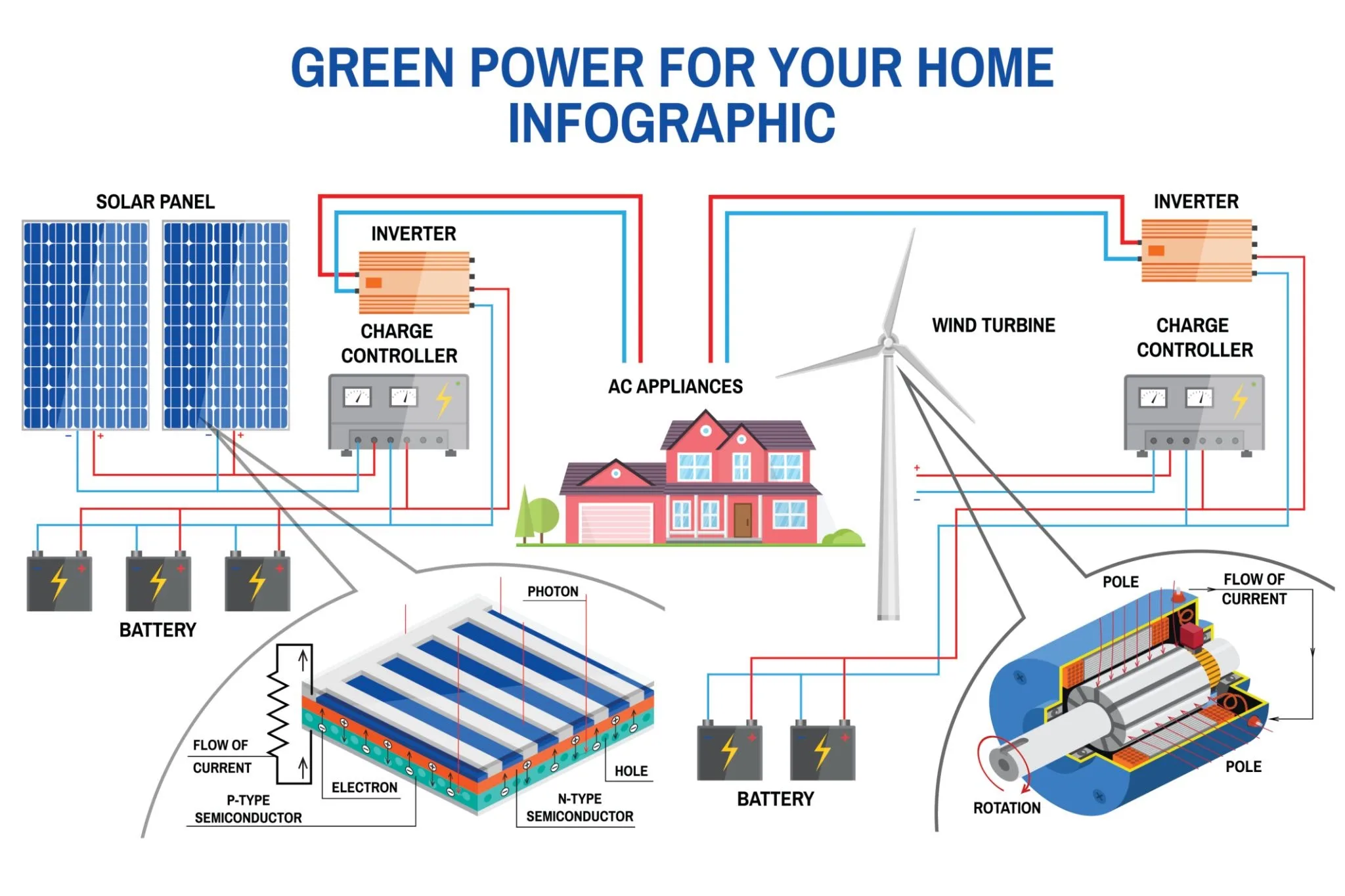
This involves having extra Power Conversion System (PCS) units or battery racks. It ensures the system can meet the required output even if one unit fails.
-
Communication Redundancy (Dual Path): This uses multiple, independent communication links (e.g., fiber, Ethernet). It prevents data loss or control failure if a primary link is disrupted.
-
Control Redundancy (Master/Backup): This involves duplicating the supervisory controller (e.g., EMS/PCS controller). The backup controller takes over instantly upon detection of the master’s failure.
However, if designed improperly, redundancy can inadvertently introduce new risks.
II. Typical Scenarios Where Redundancy Fails
Adding redundant components without robust logic increases complexity and potential failure points.
-
Ambiguous Switchover Logic: [Flowchart showing unclear decision points] The criteria for the backup system to take over the primary role are undefined or conflicting. This leads to hesitations or simultaneous control.
-
Long-Term Idle Redundant Modules: Backup components are not routinely exercised or checked. When needed, the idle module may fail due to component aging or latent defects.
-
Mutual ‘Assumption of Work’ Between Systems (Split Brain): Multiple systems incorrectly assume another system is operational. This causes both to stand down, leading to a complete system failure.
III. How Engineers Implement “Effective Redundancy”
Truly effective redundancy requires careful design and operational protocols to ensure fault tolerance.
-
Automatic and Seamless Switchover: The transfer from the failed primary unit to the backup unit must be instantaneous. This avoids disruption to the grid or load.
-
Scheduled Self-Testing (Self-Check): Redundant components must undergo regular, non-disruptive diagnostic tests. This verifies their health and readiness for immediate activation.
-
Clear Responsibility and Arbitration: A robust mechanism must precisely define which unit is the active master. This prevents the “split brain” scenario.
Imax Power favors “Necessary Redundancy” over merely “Stacking Equipment” in its Energy Storage Products and System Solutions.
IV. Conclusion
Redundancy is fundamentally a matter of design quality, not merely component quantity. A well-engineered redundant system maximizes uptime and minimizes single points of failure.
👉 Discover Imax Power’s Power Products and Energy Storage Systems engineered for high availability.