Photovoltaic-Storage-Diesel Microgrid: 5 Key Technical Essentials Why Remote Projects Can’t Do Without It
Introduction
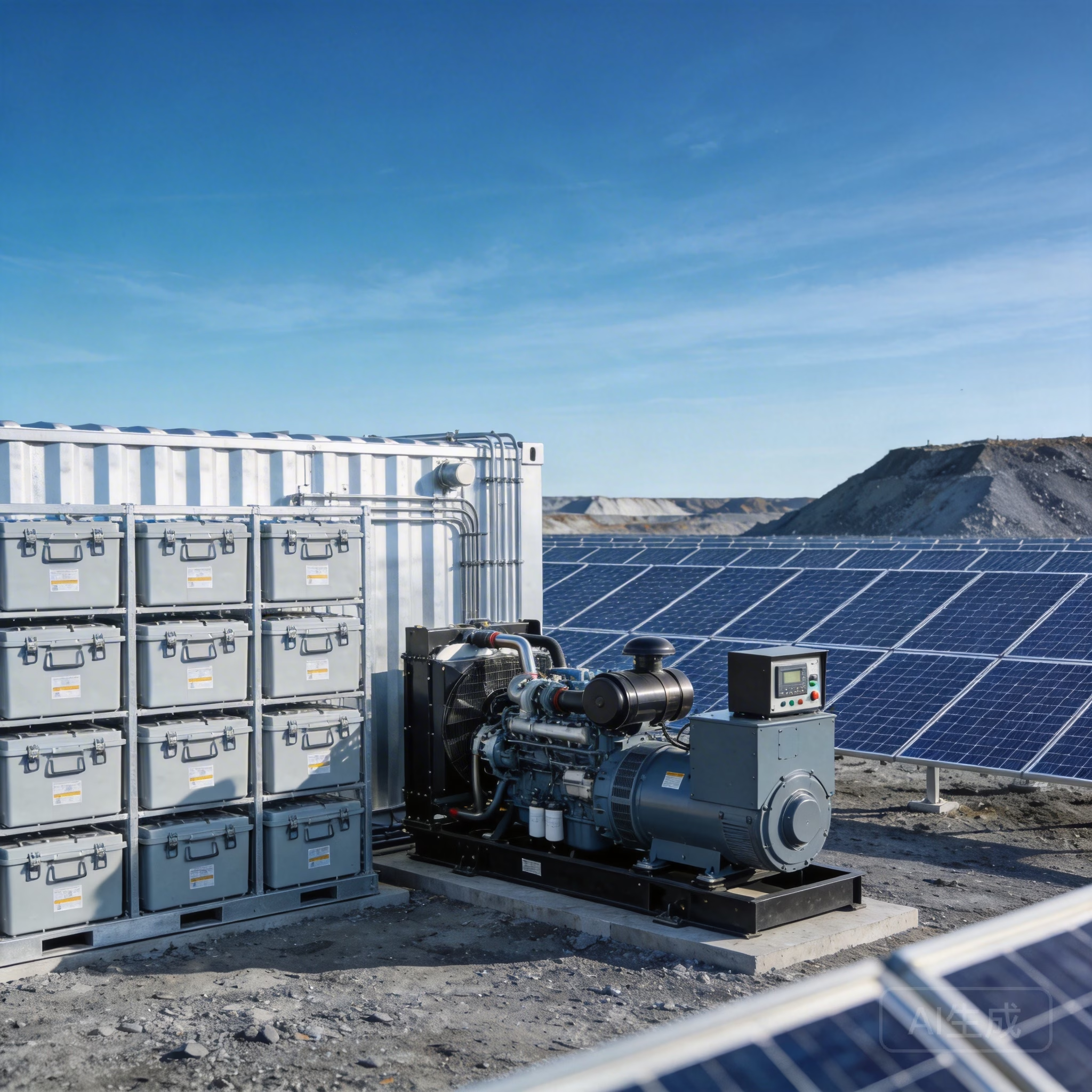
As remote-area industrial development and off-grid power demand continue to grow, photovoltaic-storage-diesel (PSD) hybrid microgrid has become the proven and reliable solution for power supply in extreme environments. Unlike the pure renewable energy solution that faces intermittency challenges, or the traditional diesel-only solution that has high fuel costs and carbon emissions, the integrated PV-storage-diesel system combines the best of three worlds: clean solar generation, flexible energy storage, and reliable diesel backup.
At Imaxpower, we’ve been involved in multiple off-grid microgrid projects across mining, border defense, and remote islands. In this article, we break down the 5 key technical essentials that make integrated PV-storage-diesel the preferred choice for extreme-environment power projects.
1. Why Combined PV-Storage-Diesel? The Market Background
Many industrial projects located in remote areas – such as mining exploration, communication base stations, border outposts, and island development – don’t have access to the main power grid. Historically, these projects relied entirely on diesel generators for power. But this approach has three major pain points:
- Extremely high fuel transportation costs: In mountainous or desert areas, fuel transportation can account for 40-60% of the total energy cost
- Carbon emissions and environmental pollution: Continuous diesel generation produces significant CO2 and noise pollution, conflicting with modern environmental requirements
- Low reliability due to generator wear: 24/7 operation accelerates equipment aging, increasing maintenance costs and outage risks
By introducing solar photovoltaic generation and battery energy storage into the system, we can achieve: higher solar penetration, lower diesel consumption, and more stable power output – this is the core value proposition of integrated PV-storage-diesel microgrid.
2. Five Core Technical Essentials of PV-Storage-Diesel Integration
2.1 Smart Energy Management System (EMS) for Coordinated Control
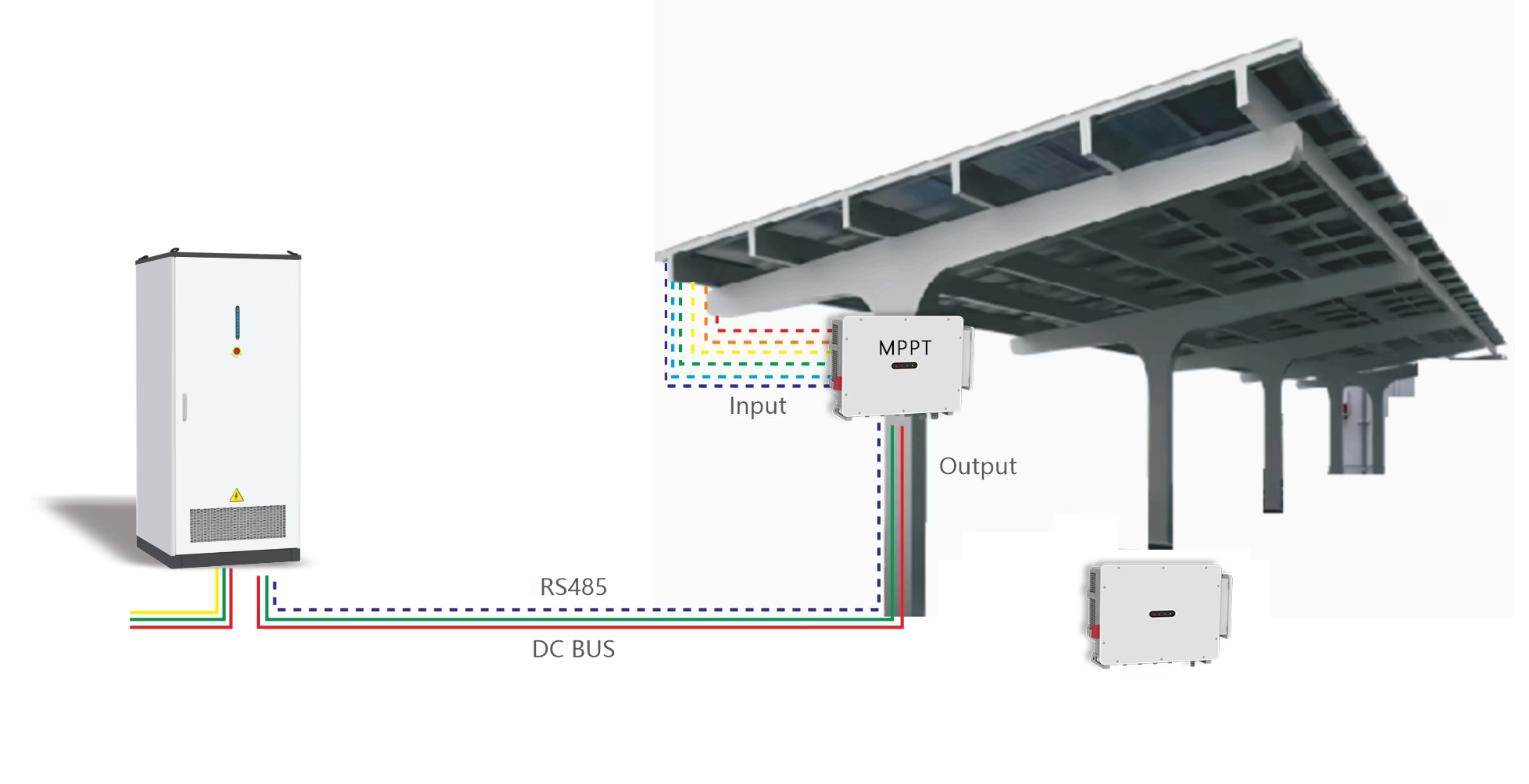
The most significant technical challenge for PV-storage-diesel integration isn’t simply connecting three types of equipment together – it’s achieving intelligent coordinated control. A good EMS needs to:
- Forecast solar irradiance and load demand
- Optimize charging/discharging strategy for energy storage
- Control diesel generator start/stop based on actual demand
- Maintain grid frequency and voltage stability
At Imaxpower, our EMS design adopts multi-objective optimization that prioritizes maximizing solar energy utilization while minimizing diesel consumption, achieving an optimal balance between economy and reliability.
2.2 Appropriate Battery Capacity Sizing
Battery energy storage plays three critical roles in PV-storage-diesel systems:
- Peak shaving: Store excess solar energy during the day, discharge during evening peak hours
- Frequency regulation: Provide fast response to smooth out fluctuations from solar generation
- Backup power: Bridging power when diesel generators need to start or undergo maintenance
One common design mistake is over-sizing the battery capacity, which significantly increases upfront investment. The optimal sizing depends on daily load profile, solar generation curve, and diesel generator availability. Our engineering team carefully analyzes project-specific data to determine the most cost-effective battery capacity.
2.3 Black Start Capability
In off-grid systems, the ability to restart after a complete blackout is critical. A well-designed PV-storage-diesel system should have black start capability relying on battery storage, without needing external power support.
This capability ensures that even after extreme weather events cause a complete system shutdown, the system can recover power supply autonomously without waiting for external maintenance personnel – which is especially important for remote projects where external support is slow to arrive.
2.4 Modular and Scalable Design
Many remote projects start with a smaller load capacity and gradually expand over time. Modular design allows system expansion by simply adding more PV panels, battery modules, or diesel generators without reconstructing the entire system.
This scalability protects the customer’s initial investment and aligns with phased project development, making financing easier and reducing upfront capital pressure.
2.5 Climate Adaptability
PV-storage-diesel systems often operate in harsh climate conditions – extremely high temperature, low temperature, high humidity, or strong sand storms. All core components need to be properly rated for the specific climate conditions:
- Heating systems for cold environments to ensure battery performance
- Enhanced cooling for high-temperature areas to extend component lifespan
- Corrosion-resistant coating for coastal or island projects
- Dust-proof and sand-proof design for desert regions
3. Typical Application Scenarios
Mining Projects
Mining operations are typically located in remote mountainous or desert areas far from the main grid. Integrated PV-storage-diesel can significantly reduce fuel transportation costs while ensuring continuous power supply for mining equipment and living facilities.
Telecom Base Stations
Remote telecom base stations require high reliability. PV-storage-diesel provides uninterrupted power supply with lower operational costs compared to diesel-only systems.
Island Development
Islands face high fuel shipping costs and have abundant solar resources. PV-storage-diesel maximizes solar utilization, reduces fossil fuel dependence, and supports sustainable island development.
Military and Border Outposts
Energy security and supply reliability are top priorities. The hybrid approach ensures power supply even when fuel convoys are interrupted by bad weather.
4. Economic Analysis: How Quickly Does It Pay Back?
According to our project data from Imaxpower, compared with traditional diesel-only systems:
- Fuel consumption reduction: 40% – 60%
- CO2 emission reduction: 30% – 50%
- Typical payback period: 3 – 5 years
- System lifespan: 20 – 25 years
With the continuous decline of solar panel and lithium-ion battery costs, the economics of PV-storage-diesel systems are improving year by year. For most remote projects with diesel price above $1.5 per liter, the investment already makes financial sense today.
Conclusion: The Future of PV-Storage-Diesel
As renewable energy penetration continues to increase in off-grid systems, PV-storage-diesel will remain the dominant solution for the foreseeable future. While battery technology continues to improve, the diesel backup will still be needed for multi-day cloudy or rainy periods when solar generation is insufficient.
The key to a successful project lies in: correct system architecture design, optimized component sizing, professional coordinated control software, and reliable after-sales service. When these elements come together, an integrated PV-storage-diesel microgrid can deliver clean, reliable, and economical power for remote areas.
About Imaxpower
Imaxpower is a professional energy storage and microgrid solution provider with rich experience in delivering integrated energy systems to remote and industrial projects worldwide. We specialize in customized PV-storage-diesel microgrid design, equipment supply, and complete project delivery.
If you are planning a remote off-grid project and need professional consulting or quotation, feel free to contact us:
📞 Contact Phone: +86-19066355917
📧 Email: info@imax-pwr.com
We welcome your inquiry and will provide you with a customized solution that meets your specific project requirements.