Projects Most Suitable for Wind-Storage Integration
1. Off-Grid Power Supply Scenarios
- Islands: Far from the mainland power grid, traditional power supply mainly relies on diesel generators, which are costly and environmentally unfriendly. Wind-storage integration systems can leverage the abundant wind energy resources on islands. The wind turbine generators (WTGs) provide renewable power input, and the battery energy storage systems (BESS) supply stable electricity when wind power is insufficient. This reduces dependence on diesel generation, cuts power supply costs, and achieves sustainable energy use.
- Mining Areas: Often located in remote regions with limited access to the main grid. Wind-storage systems can offer a self-sufficient power solution. The WTGs harness wind energy, and the BESS stores excess energy for use during low-wind periods or peak demand. This ensures continuous operation of mining equipment, reduces downtime caused by power outages, and lowers energy expenses.
- Pastures: In vast pasture areas, connecting to the grid is challenging and expensive. Wind-storage integration provides a reliable power source for livestock farming activities such as lighting, water pumping, and fence electrification. The system can adapt to the variable wind conditions in pastures, with the BESS maintaining a stable power supply to meet daily operational needs.
- Unmanned Sites: These sites, like remote monitoring stations or communication base stations, require uninterrupted power. Wind-storage systems can operate independently of the grid. The WTGs generate power from wind, and the BESS acts as a backup to ensure continuous power supply for critical equipment, even during extended periods of low wind or grid failures.
2. Microgrid Scenarios
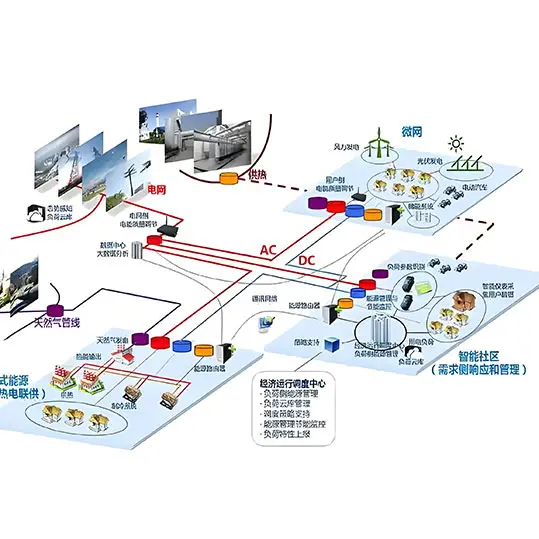
- Industrial Park Microgrids: In industrial parks, the power demand is high and diverse. A microgrid with wind-storage integration can enhance energy self-sufficiency. The WTGs contribute renewable power, and the BESS helps balance the load within the park. The energy management system (EMS) optimizes power distribution, enabling local autonomous operation and reducing reliance on the main grid, especially during peak demand or grid outages.
- Remote Areas with Weak Grids: In remote regions where the grid infrastructure is underdeveloped and power supply is unstable, wind-storage microgrids can provide reliable electricity. The system can operate independently, using wind power as the primary energy source and the BESS for energy storage and regulation. This improves the quality of power supply in these areas, supports local economic development, and enhances the quality of life for residents.
3. Industrial and Commercial Power Consumption Scenarios
- Areas with Significant Peak-Valley Price Differences: In regions where there is a large gap between peak and off-peak electricity prices, wind-storage integration systems can perform peak-shaving and valley-filling. During off-peak hours when electricity is cheap, the excess wind power can be stored in the BESS. During peak hours, the stored energy is discharged to reduce the electricity purchase from the grid, thereby lowering energy costs for industrial and commercial users.
- Sites Requiring Demand Management: For businesses with high power demand and strict demand management requirements, wind-storage systems can help control the maximum power demand. The EMS monitors the power consumption in real-time and adjusts the charging and discharging of the BESS accordingly. This prevents excessive power demand charges and optimizes energy usage, improving the overall energy efficiency of the enterprise.
4. New Energy Supporting Scenarios
- Wind Power Consumption: In areas with large-scale wind power installations, wind-storage integration can effectively solve the problem of wind power curtailment. When the grid is unable to absorb all the generated wind power, the excess energy can be stored in the BESS. This increases the utilization rate of wind power resources and promotes the development of renewable energy.
- Power Limitation and Stable Grid Connection: In some cases, wind farms may face power limitations due to grid constraints or need to ensure stable grid connection. The wind-storage system can regulate the power output through the EMS and power conversion system (PCS). It supports active and reactive power regulation, power output limitation, and power ramp control, improving the grid-friendliness of wind power generation and ensuring stable operation of the power system.
Imax Power Wind-Storage Integration System Components
- Wind Turbine Generators (WTGs): These are the core components for generating renewable power. They convert the kinetic energy of wind into electrical energy, providing a clean and sustainable power input for the entire system. Imax Power selects high-quality WTGs with advanced technology to ensure efficient wind energy conversion and reliable operation in various wind conditions.
- Battery Energy Storage System (BESS): The BESS plays a crucial role in stabilizing the power supply. It can store excess wind power during periods of high generation and discharge it when wind power is insufficient or during peak demand. Imax Power’s BESS adopts advanced battery technologies, offering high energy density, long cycle life, and excellent safety performance, enabling efficient energy storage and release.
- Power Conversion System (PCS): The PCS is responsible for bidirectional energy conversion between the DC side (from the WTGs and BESS) and the AC side (connected to the grid or loads). It supports both grid-tied and off-grid modes, allowing seamless switching between different operation modes. Imax Power’s PCS features high conversion efficiency, fast response speed, and comprehensive protection functions, ensuring stable and reliable power conversion.
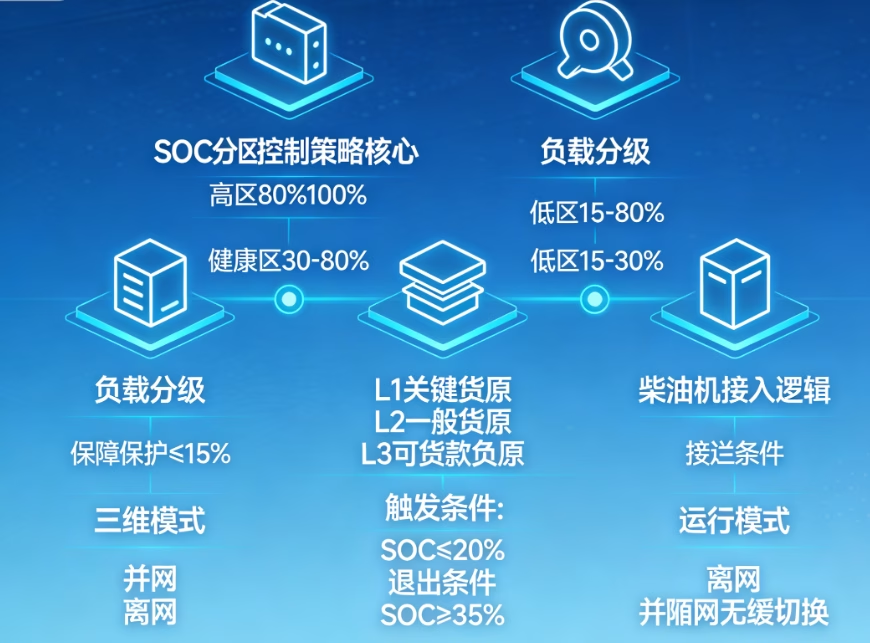
- Energy Management System (EMS): The EMS is the “brain” of the wind-storage integration system. It performs strategy scheduling, power forecasting, state-of-charge (SOC) management, and load priority control. Through intelligent algorithms, the EMS optimizes the operation of the entire system, maximizing the utilization of wind power, reducing energy costs, and ensuring the stable supply of power to critical loads.
- Grid Connection/Off-Grid Switching and Protection System: This system enables seamless switching between grid-tied and off-grid modes. In case of a grid failure, it can automatically switch to off-grid operation to ensure the continuous power supply of key loads. It also provides black-start capability and islanding protection, enhancing the reliability and safety of the system during abnormal conditions.
- Monitoring Platform (SCADA/Cloud Platform): The monitoring platform allows for remote operation and maintenance of the wind-storage integration system. It provides real-time monitoring of system parameters, fault alarms, log recording, and report generation. Users can access the platform through a web browser or mobile app, enabling convenient management and timely response to system issues, improving the overall operational efficiency.
Key Pain Points Solved by Imax Power
- Large Wind Power Fluctuations and Power Outages due to Load Changes: The BESS acts as a “buffer pool”, and the PCS performs power regulation. By storing and releasing energy according to the load demand, the system output becomes smoother, reducing power surges and interruptions, and ensuring a stable power supply.
- High Diesel Costs and Fear of Power Outages in Off-Grid Scenarios: Wind-storage integration can reduce the dependence on diesel generators. Diesel changes from being the “main power source” to an “emergency backup”, significantly decreasing fuel consumption and operating costs while ensuring reliable power supply in off-grid environments.
- Concerns about Power Limitation and Unstable Power Output in Grid-Tied Scenarios: Through EMS strategy control, the system supports active and reactive power regulation, power output limitation, and power ramp control. This improves the grid-friendliness of wind power generation, enabling stable grid connection and reducing the impact on the power grid.
- Complex Project Delivery and System Integration Issues: Imax Power provides a system-level solution, covering system design, equipment integration, commissioning and grid connection, and operation and maintenance training. This reduces the risks for general contractors and ensures the smooth implementation of wind-storage integration projects.
Operation Modes
- Grid-Tied Mode: In this mode, the system gives priority to consuming wind power. Excess electricity can be used to charge the BESS or fed into the grid. During peak electricity price periods, the BESS discharges to shave the peak load. The system also supports demand management and power factor optimization, improving energy efficiency and reducing costs.
- Off-Grid Mode: Wind power serves as the main power source, and the BESS stabilizes the voltage and frequency. The system supports black-start functionality, allowing it to restore power supply independently after a complete power outage. It can also be connected to diesel generators as an emergency backup to ensure continuous power supply in case of prolonged low-wind conditions.
- Hybrid Mode (Seamless Grid Connection/Off-Grid Switching): When the grid fails, the system automatically switches to off-grid operation, ensuring the continuous power supply of critical loads. This seamless switching capability provides high reliability and stability for the power supply, minimizing the impact of grid failures on users.
Solution Advantages
- High Reliability: The system ensures uninterrupted power supply for critical loads. It supports load grading, redundancy strategies, and abnormal isolation, and can adapt to extreme environmental conditions, providing a stable and reliable power solution.
- High Efficiency: The PCS enables efficient energy conversion, and the EMS optimizes the charging and discharging of the BESS and the utilization of wind power. This reduces invalid energy losses and improves the overall efficiency of the system, saving energy and reducing costs.
- High Scalability: The system adopts a modular design, allowing for easy expansion of the battery, PCS, wind turbines, and load side according to project requirements. This flexibility enables the system to adapt to the growth of the project and meet changing power demands.
- Easy Operation and Maintenance: The remote monitoring platform supports remote diagnosis, fault recording, alarm notification, and report generation. This improves the efficiency of operation and maintenance, enabling timely detection and resolution of system issues, reducing downtime, and ensuring the long-term stable operation of the system.
Frequently Asked Questions
- Q1: What is the difference between a wind-storage integration system and a wind-solar-storage integration system?
- A: A wind-storage integration system consists of “wind + energy storage”, which is more suitable for areas with high wind resources and off-grid power supply scenarios. A wind-solar-storage integration system adds photovoltaic (PV) power generation. With PV, the system can generate more stable power during the day, providing a smoother power supply throughout the day and night, and is suitable for scenarios requiring 24/7 stable power.
- Q2: How to select the energy storage capacity for a wind-storage system?
- A: The selection of energy storage capacity mainly depends on three factors: the load curve, wind resource fluctuations, and the acceptable power outage duration. Generally, it is configured based on a combination of “power supply duration + power fluctuation suppression” to ensure a stable power supply and effective regulation of wind power output.
- Q3: Is a diesel generator necessary for off-grid projects?
- A: Not necessarily. If the load fluctuations are large and the risk of continuous low-wind conditions is high, a diesel generator can serve as an emergency power source to ensure a more stable power supply. However, a larger energy storage capacity can also be used to partially replace the diesel dependence, reducing the use of diesel and environmental pollution.
- Q4: Can the system support capacity expansion?
- A: Yes, it can. The PCS, battery, and wind turbines can all be expanded in modules, and the EMS strategies can be upgraded simultaneously. This allows the system to adapt to the increasing power demands of the project and provide a scalable power solution.