Integrated PV-Storage-Charging: The Emerging Cornerstone of the New Energy Ecosystem – A Comprehensive Market Research
Executive Summary
The global energy transition is accelerating at an unprecedented pace, driven by the urgent need to combat climate change and achieve carbon neutrality goals. Among the various technological innovation pathways, Integrated Photovoltaic-Storage-Charging (IPSC) has emerged as a disruptive solution that seamlessly integrates renewable energy generation, energy storage, and electric vehicle charging into a single system. This integrated approach not only addresses the intermittency challenge of renewable energy but also creates new business models and value propositions for stakeholders across the energy value chain.
According to recent industry analysis, the global integrated PV-storage-charging market is projected to grow at a compound annual growth rate (CAGR) of over 35% from 2024 to 2030, reaching an estimated market size of $45 billion by the end of the forecast period. This remarkable growth is fueled by multiple factors: the plummeting cost of solar panels and lithium-ion batteries, increasing EV adoption globally, supportive policy frameworks, and growing demand for reliable clean energy solutions among commercial and industrial consumers.
1. Understanding the Integrated PV-Storage-Charging Concept
1.1 What is Integrated PV-Storage-Charging?
Integrated PV-storage-charging is a comprehensive energy solution that combines three core components into one synchronized system:
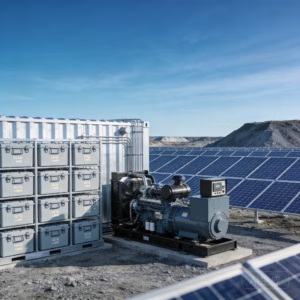
- Photovoltaic Power Generation: Solar panels convert sunlight into electricity, providing clean, renewable energy that can be used immediately or stored for later use
- Energy Storage System: Batteries store excess solar energy generated during peak production hours, ensuring continuous power supply when sunlight is unavailable or during grid outages
- Electric Vehicle Charging Infrastructure: DC fast chargers provide high-power charging services for electric vehicles, utilizing both solar generation and stored energy
The synergy among these three components creates a self-consistent, zero-carbon energy ecosystem that maximizes renewable energy utilization, reduces demand charges from the grid, and provides resilient backup power.
1.2 Key System Architectures
Currently, the market offers several dominant architectural approaches for integrated PV-storage-charging systems:
a) AC-coupled Systems
– Inverters are separately configured for PV generation and energy storage
– Higher flexibility in system sizing
– Easier to retrofit existing charging stations
– Lower overall efficiency compared to DC-coupled
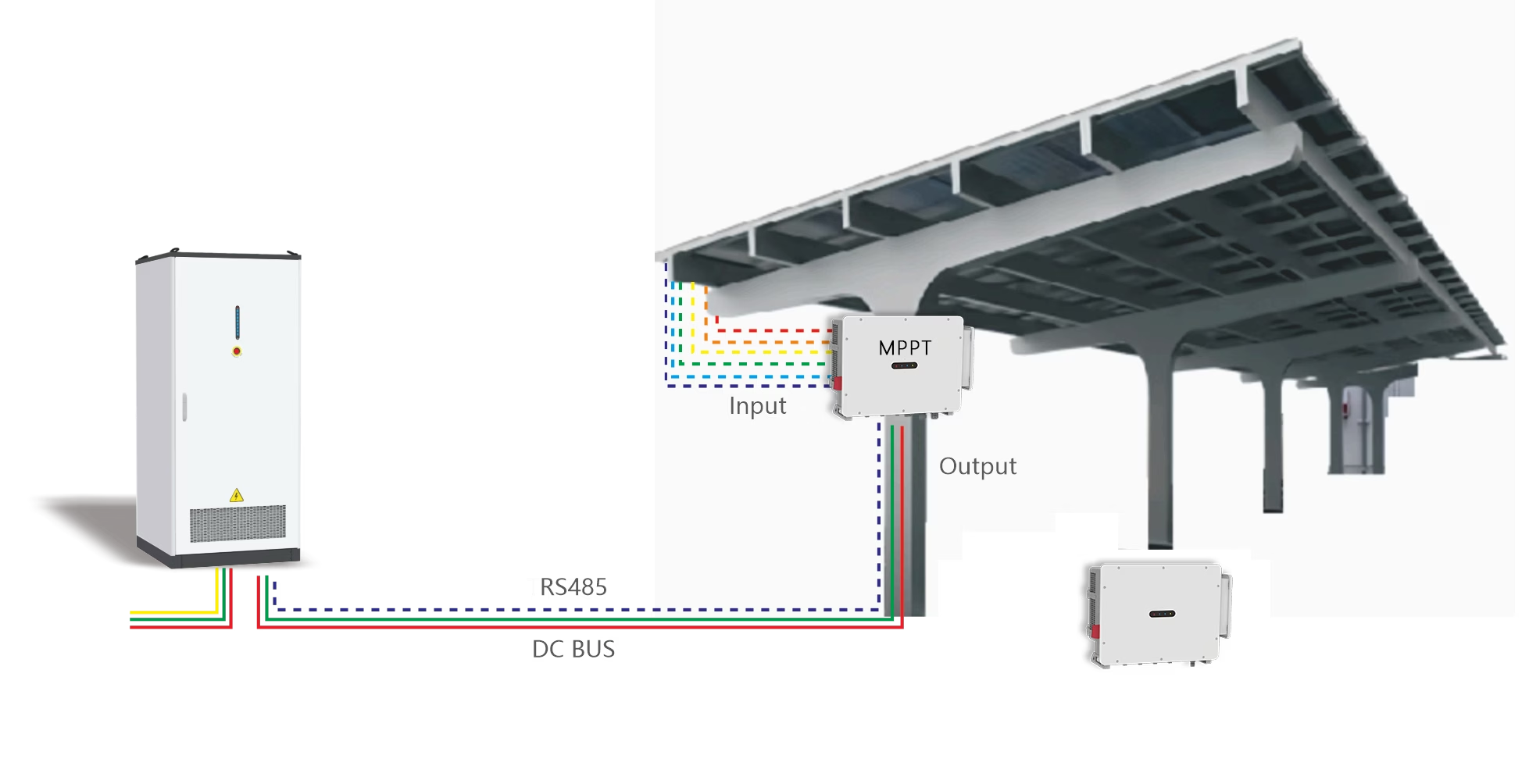
b) DC-coupled Systems
– PV generation directly charges batteries through DC-DC converters
– Higher overall system efficiency (reduced AC-DC conversion losses)
– Lower component costs
– Gaining increasing market share in new installations
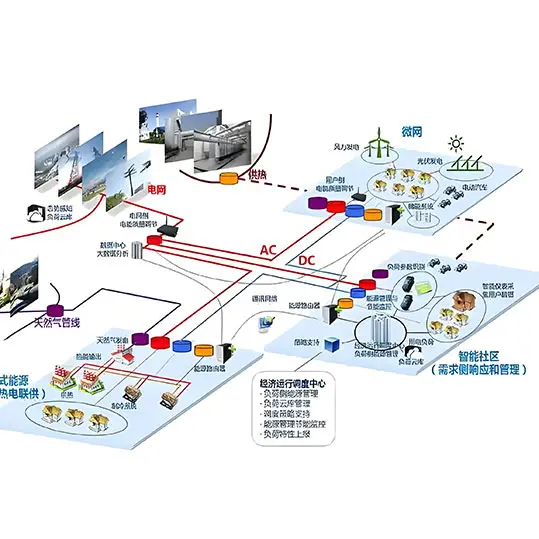
c) Microgrid-based Systems
– Full islanding capability
– Can operate completely off-grid or in grid-tie mode
– Ideal for remote locations and critical infrastructure
– Higher upfront investment but greater energy independence
2. Market Drivers and Growth Catalysts
2.1 The EV Revolution is Creating Unprecedented Charging Demand
Global electric vehicle adoption has entered a phase of exponential growth. In 2023, EV sales surpassed 10 million units worldwide, accounting for over 14% of all new car sales. According to the International Energy Agency (IEA), this number is expected to reach 35 million by 2030. The rapid proliferation of EVs requires massive investments in charging infrastructure, and integrating PV generation and energy storage with charging stations offers a compelling solution to grid capacity constraints and decarbonization goals.
2.2 Declining Technology Costs
- Solar panels: Costs have declined by over 90% in the past decade
- Lithium-ion batteries: Pack costs have fallen from over $1,000/kWh in 2010 to around $130/kWh in 2024
- Power electronics: Continuing innovation in semiconductor technology (especially wide-bandgap semiconductors like SiC and GaN) has improved efficiency and reduced costs
These cost reductions have dramatically improved the economics of integrated PV-storage-charging systems, making them competitive with traditional grid-only charging solutions in many markets.
2.3 Policy Support and Regulatory Incentives
Governments around the world are introducing aggressive policies to accelerate the deployment of clean energy and EV infrastructure:
- United States: Inflation Reduction Act (IRA) provides investment tax credits up to 30% for clean energy projects
- European Union: Fit-for-55 package mandates significant renewable energy capacity additions and CO2 reductions
- China: New Energy Demonstration City programs actively promote integrated PV-storage-charging projects
- India: FAME II scheme provides substantial subsidies for EV charging infrastructure
2.4 Grid Resilience and Energy Security Concerns
Recent global events, including the 2022 European energy crisis and increasing frequency of extreme weather events due to climate change, have highlighted the importance of energy security and grid resilience. Integrated PV-storage-charging systems provide decentralized clean energy generation and storage, reducing dependence on centralized fossil fuel power plants and enhancing overall energy system resilience.
3. Major Market Segments and Use Cases
3.1 Commercial and Industrial (C&I) Sites
Market share: ~45% (2023)
C&I sites represent the largest and most mature market segment for integrated PV-storage-charging solutions:
- Logistics parks and distribution centers: Companies like Amazon, UPS, and DHL are deploying these systems to power their electric delivery fleets while reducing energy costs
- Automobile manufacturing plants: EV producers are installing integrated systems to power their production facilities and charge employee and company vehicles
- Shopping malls and retail centers: Retailers benefit from reduced peak demand charges while providing value-added charging services to customers
Key advantages for C&I users:
– Significant electricity bill savings through demand charge management
– Revenue stacking from multiple value streams (energy sales, capacity markets, ancillary services)
– Enhanced sustainability credentials that appeal to environmentally conscious consumers
3.2 Public Charging Stations
Market share: ~30% (2023)
Independent charging network operators are increasingly adopting integrated PV-storage-charging solutions:
- Highway rest stops: Ideal locations for large-scale solar installations coupled with battery storage to provide multiple DC fast chargers without requiring expensive grid upgrades
- Urban charging hubs: Battery storage allows high-power charging even in locations where grid capacity is limited
- Destination charging: Hotels, restaurants, and tourist attractions can provide clean EV charging to their guests
3.3 Residential Applications
Market share: ~15% (2023)
The residential market is still in the early adoption phase but growing rapidly:
- Homeowners with solar panels and EVs: Integrating rooftop solar, home battery storage, and EV charging provides maximum self-consumption and energy independence
- Multi-unit dwellings: Shared integrated systems can provide cost-effective charging for multiple residents
- Market growth drivers: Increasing home EV adoption, rising electricity prices, and technology cost reductions
3.4 Specialized Industrial Applications
Market share: ~10% (2023)
- Mining sites: Off-grid or weakly grid-connected mining operations can utilize solar+storage to power mining equipment and EV haul trucks
- Ports and freight hubs: Zero-emission port operations require integrated clean energy solutions for charging electric container ships and terminal equipment
- Remote telecom towers: Reliable power supply for critical communications infrastructure
4. Competitive Landscape
4.1 Established Energy Companies
Traditional energy companies are rapidly transitioning into the integrated PV-storage-charging market:
- Tesla: One of the early movers with their Megapack battery solutions and Supercharger network, offering fully integrated solutions
- BYD: Vertical integration from batteries to EVs to charging infrastructure, strong position in the Chinese market
- ABB: Provides power electronics and system integration expertise
- Siemens: Focuses on digitalization and grid integration solutions
4.2 Specialized Integrated Solution Providers
A new generation of companies is focusing exclusively on integrated PV-storage-charging solutions:
- ChargePoint: Leading EV charging network provider expanding into integrated solar+storage solutions
- EVBox: European champion with strong focus on smart charging and renewable integration
- Sunrun: Leading residential solar+storage provider starting to integrate EV charging
4.3 Emerging Startups
The market is seeing vigorous startup activity with innovative approaches:
- Pairity: Software platform optimizing integrated system operations
- Zap-Map: Charging network mapping with focus on renewable-powered charging
- Kempower: Finnish company specializing in high-power DC charging solutions
5. Key Challenges and Barriers
5.1 High Upfront Capital Requirements
Even though technology costs have declined significantly, integrated PV-storage-charging systems still require substantial upfront investment, creating financing challenges especially for smaller project developers.
5.2 Complex Interconnection Procedures
Connecting integrated systems to the grid often involves complex and time-consuming interconnection approval processes, varying significantly among different utilities and regions.
5.3 Regulatory and Tariff Uncertainty
Many regulatory frameworks have not caught up with the rapid technological development, creating uncertainty around issues like net metering, demand charges, and revenue stacking opportunities.
5.4 Technical Complexity and O&M Requirements
Integrated systems require sophisticated control and management systems, and operators need specialized expertise for operations and maintenance. This creates barriers for new market entrants.
6. Future Trends and Technology Development
6.1 Increasing System Intelligence
Artificial intelligence and machine learning will play an increasingly important role in optimizing system operation, predicting solar generation, forecasting charging demand, and maximizing revenue streams.
6.2 Vehicle-to-Grid (V2G) Integration
Future integrated systems will increasingly support bidirectional power flow, enabling EV batteries to provide grid services and additional revenue streams through vehicle-to-grid functionality.
6.3 Second-Life Battery Applications
Batteries from electric vehicles that no longer meet automotive performance requirements (typically around 70-80% remaining capacity) can find new life in integrated PV-storage-charging systems, further improving overall economics and sustainability.
6.4 Solid-State Battery Adoption
Next-generation solid-state batteries promise higher energy density, longer cycle life, and improved safety, which will further enhance the value proposition of integrated systems.
7. Conclusions and Strategic Recommendations
7.1 Market Outlook
The integrated PV-storage-charging market is at an inflection point. Over the next five years, we expect to see:
- Rapid market consolidation: Leading players will emerge through mergers and acquisitions as the market scales
- Technology standardization: Common interfaces and communication protocols will reduce system integration costs
- New business models: As-a-service models will lower entry barriers for customers and accelerate adoption
- Cost competitiveness: By 2027-2028, integrated PV-storage-charging will be cost-competitive with grid-only charging in most major markets without subsidies
7.2 Strategic Recommendations for Stakeholders
For Investors:
– Focus on companies with strong project development capabilities and access to low-cost capital
– Look for investments in enabling technologies (smart software, power electronics) that benefit from overall market growth
– Consider the long-term value of charging network assets with integrated renewable generation
For Utilities:
– Develop streamlined interconnection procedures for integrated projects
– Consider partnering with third-party developers to offer integrated solutions to your customers
– Utilize integrated PV-storage-charging projects to defer expensive grid upgrades
For Policymakers:
– Update regulatory frameworks to enable revenue stacking and fair compensation for grid services provided by integrated systems
– Provide clear and long-term incentive frameworks to stimulate investment
– Prioritize integrated projects in climate action and energy transition plans
Final Thoughts
Integrated PV-storage-charging is more than just another renewable energy technology – it represents a fundamental reconfiguration of how energy is generated, stored, and consumed in the new energy ecosystem. As the world continues to accelerate toward deep decarbonization, integrated solutions that combine multiple value streams will become increasingly important. For companies, investors, and policymakers who understand this transition and position themselves accordingly, the opportunities are enormous.
The question is no longer whether integrated PV-storage-charging will play a major role in the future energy system – the question is who will capture the value that this rapidly growing market creates.