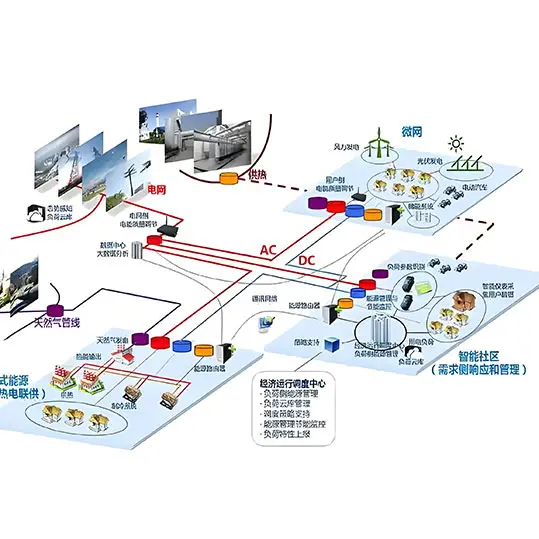
Solution Value
- Enhance Comprehensive Energy Utilization Rate: Achieve complementary use of electricity, heat, and cold to maximize energy conversion efficiency. This ensures optimal use of available energy resources.
- Strengthen System Operation Stability: Multi-energy collaborative power supply reduces the risk of single-energy fluctuations. Stable operation is crucial for reliable energy delivery.
- Support Flexible Multi-Energy Scheduling: Involve energy storage systems in coordination to achieve dynamic energy balance. Flexible scheduling optimizes energy distribution.
- Adapt to Multi-Scenario Independent Operation: Achieve self-sufficiency in parks, communities, and off-grid areas. Versatile applications meet diverse energy needs.
- Establish Intelligent Management and Control System: EMS unifies the scheduling of various energy flows and optimizes system operation strategies. Smart control enhances overall efficiency.
- Reduce Comprehensive Energy Costs: Utilize surplus energy and storage comprehensively to improve economy and investment returns. Cost reduction boosts profitability.
- Assist Green and Low-Carbon Transformation: Increase the proportion of clean energy utilization and promote sustainable energy development. This supports environmental goals.
Key Core Products & Technical Systems
Module Products
Imax energy storage converters PCS/Bidirectional DCDC/MPPT/STS/BMS/EMS (assuming these are the module products under the Imax Power brand; adjust if actual product names differ)
System Products
Imax Power integrated energy storage system
Hierarchical Structure
System Top Layer: Collaborative Control and Energy Management
- EMS Intelligent Energy Management: Real-time monitoring and optimized scheduling achieve complementary coordination of electricity, heat, and cold. Intelligent management optimizes energy use.
- Multi-Energy Collaborative Control Algorithm: Based on prediction and optimization, realize adaptive control of the grid, energy storage, and loads. Collaborative control enhances system adaptability.
- Microgrid Autonomy and Grid-Switching: Seamless switching strategies ensure stable system operation in both islanded and grid-connected modes. Autonomy and switching capabilities improve reliability.
System Middle Layer: Energy Conversion and Optimization
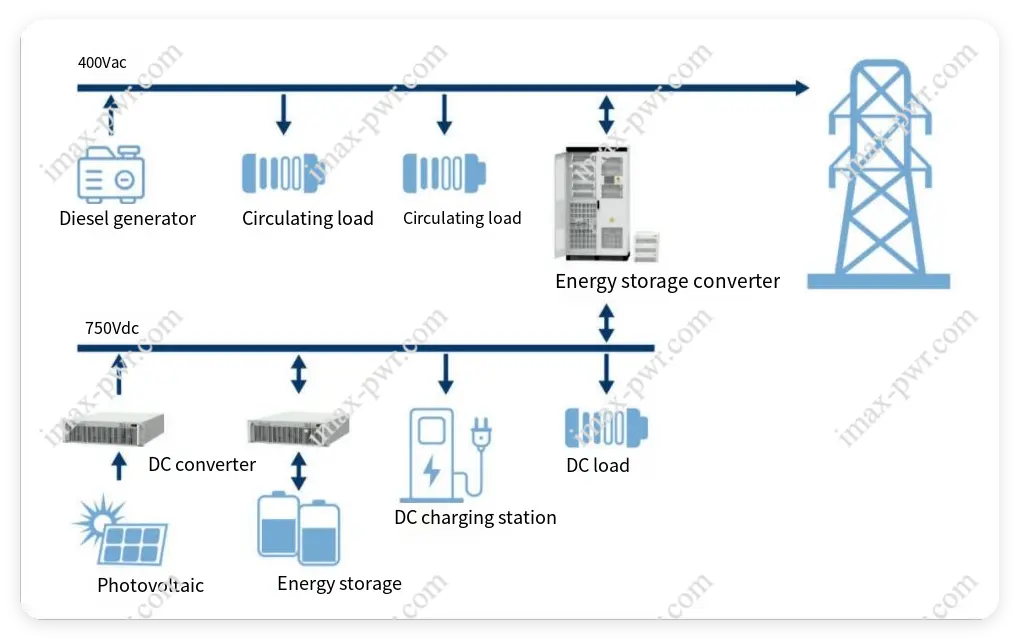
- Hybrid Converter (Hybrid PCS): Unify DC busbars to enable multi-source access for energy storage, photovoltaic, and wind power. Unified systems enhance flexibility.
- Multi-Terminal DC Coupling Architecture: Achieve flexible complementarity between optical, storage, and thermal energy through DC coupling. Coupling improves energy integration.
- Energy Path and Power Allocation Optimization: Dynamically allocate energy flow to reduce losses and fluctuations. Optimization enhances efficiency.
System Bottom Layer: Intelligent Hardware Support, Equipment and Perception
- High-Precision Measurement and Communication Interfaces: Support IEC 61850/Modbus/CAN communications for multi-source control. Precise communication ensures system coordination.
- Energy Storage Unit Efficient Management (BMS + PCS): Accurate SOC/SOH estimation improves energy response speed and system lifespan. Efficient management optimizes performance.
- Electrical Protection and Isolation Technology: Ensure electrical safety and fault isolation in multi-energy flow support. Protection is critical for safety.
- Digital Twin Energy Network Model: Virtually synchronize models for predictive control and operation. Simulation aids in proactive management.
System Support Layer: Data and Cloud Collaboration, Digital Twin and Operation & Maintenance
- Cloud-Edge Collaborative Control Platform: Combine local autonomy with cloud optimization to enhance overall operational economy. Collaboration improves efficiency.
- Energy Efficiency Data Analysis and Prediction Algorithms: Predict loads and conditions using AI models for adaptive scheduling. Predictive analysis optimizes performance.