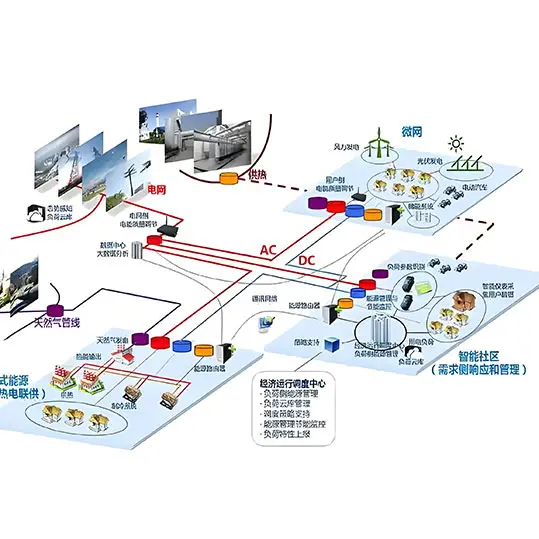
Solution Value
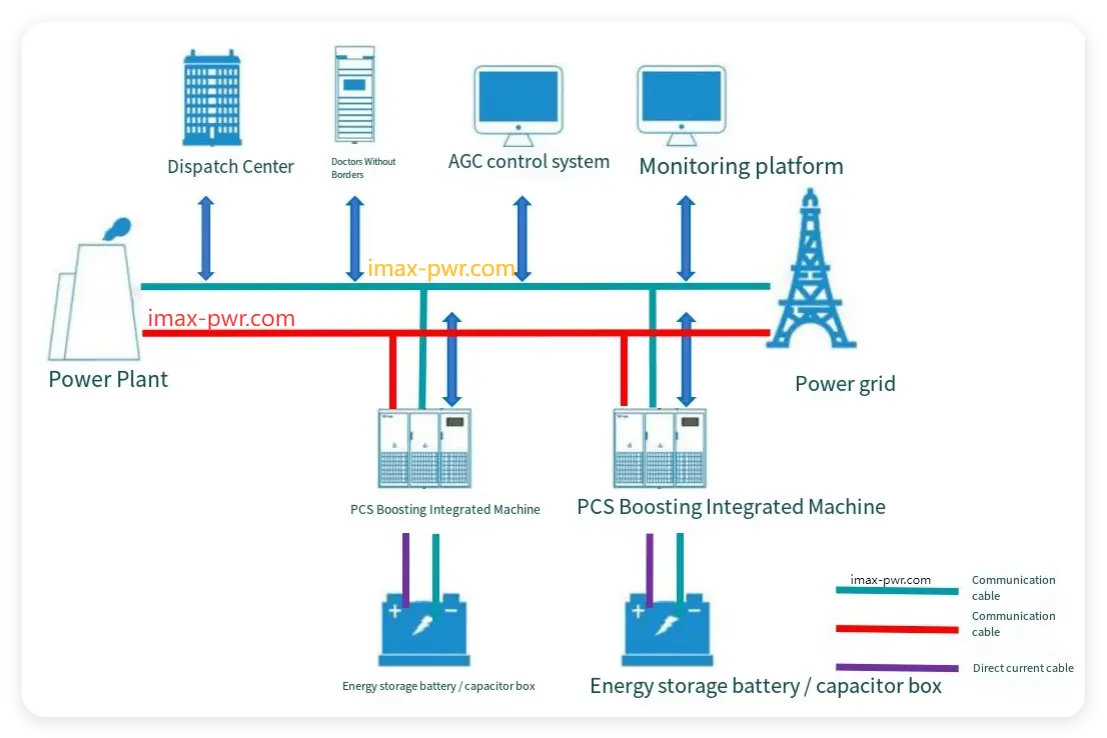
- Support Grid Deep Frequency Regulation: Participate in AGC automatic control to precisely maintain system frequency stability. This ensures the grid operates within the desired frequency range.
- Enhance Grid Operation Stability: Provide long-term power support to smooth frequency fluctuations and load changes. Stable grid operation is essential for reliable power supply.
- Leverage Energy Storage High-Rate Features: Enable rapid charge-discharge responses to meet dynamic secondary frequency regulation demands. Quick reactions help in maintaining grid balance.
- Achieve Intelligent Regulation Optimization: EMS and AGC coordinated control improve overall frequency regulation efficiency. Smart control strategies optimize system performance.
- Increase Ancillary Service Revenue: Participate in frequency regulation market transactions to gain long-term power service returns. Additional income enhances the economic benefits of energy storage.
- Support New Energy Friendly Grid Integration: Smooth renewable energy output and increase the proportion of new energy grid integration. This promotes sustainable energy development.
- Promote Green and Low-Carbon Development: Reduce thermal power frequency regulation pressure and assist in energy structure optimization and transformation. This contributes to environmental protection.
Key Core Products & Technical Systems
Module Products
Imax energy storage converters PCS & ACDC/MPPT/STS/BMS/EMS (assuming these are the module products under the Imax Power brand; adjust if actual product names differ)
System Products
Imax Power integrated energy storage system
Primary Dimensions
System Architecture Layer
- System Topology: Distributed multi-level control architecture. The combination of master-slave coordination and local autonomy achieves high-precision frequency regulation control. This enhances system flexibility and responsiveness.
- Grid Interface: AC side power smoothing. Optimize the output curve to reduce disturbances to grid frequency fluctuations. Smooth power output ensures stable grid operation.
- Power Layer: Active and reactive power coordinated regulation. Realize frequency and voltage dual-objective optimized regulation. Coordinated control improves power quality.
Control Strategy Layer
- Main Control Algorithm: Secondary frequency regulation coordinated control. Combine AGC signals for precise power regulation and optimization allocation. Accurate control ensures effective frequency regulation.
- Optimization Logic: Model prediction and adaptive control. Use real-time prediction control algorithms to enhance dynamic response and stability. Predictive control improves system adaptability.
- Regulation Mechanism: Multi-time-scale coordination. Balance power at second-level and minute-level scales to improve frequency regulation accuracy. Coordinated regulation optimizes performance.
Equipment Layer
- Power Conversion: High-dynamic-response PCS. Support high-speed current loop control for millisecond-level power regulation. Fast power conversion is crucial for quick responses.
- Core Configuration: High-rate battery cluster parallel connection. Support sustained high-rate charge-discharge capabilities for stable energy output. Reliable energy storage ensures continuous operation.
- Electrical Design: Low-impedance busbar and filter optimization. Reduce ripples and harmonics to improve power quality. Optimized electrical design enhances system efficiency.
Intelligent Operation and Maintenance Layer
- State Perception: Cloud-edge collaborative monitoring. Cloud big data and local edge computing collaboration achieve real-time optimization. Real-time monitoring ensures system health.
- Model Iteration: Self-learning frequency model. Dynamically optimize frequency regulation parameters based on historical data. Self-learning models improve accuracy over time.
- Efficiency Optimization: Energy feedback and loss control. Maximize system efficiency and reduce heat loss and waste. Efficient operation saves energy and costs.
- Safety Protection: Intelligent thermal management system. Temperature zoning control ensures safe high-rate operation. Safety is paramount for system reliability.
- Performance Evaluation: Frequency regulation accuracy adaptive evaluation. Analyze system response errors in real-time and optimize control strategies. Continuous evaluation improves performance.