Solution Value
- Rapid Response to Grid Frequency: Achieve millisecond-level dynamic response to stabilize grid frequency fluctuations. Quick reactions are essential for maintaining grid stability during sudden changes.
- Improve System Tuning Accuracy: High-precision power control ensures frequency stability within the target range. Precise control guarantees optimal performance under varying conditions.
- Leverage High-Rate Characteristics: High-rate batteries enable rapid charging and discharging, meeting instantaneous regulation demands. This ensures immediate response to frequency deviations.
- Implement Intelligent Control Strategies: EMS real-time monitoring and algorithm optimization enhance tuning efficiency. Smart strategies optimize energy use and system performance.
- Enhance Grid Operation Stability: Effectively resist frequency disturbances to ensure reliable system safety. Stability is key to preventing grid failures and ensuring continuous operation.
- Create Power Auxiliary Revenue: Participate in power market tuning services to boost storage investment returns. Additional revenue streams improve the economic viability of energy storage.
- Assist Green Energy Consumption: Smooth new energy fluctuations and promote high-proportion renewable energy grid integration. This supports sustainable energy goals and reduces carbon footprint.
Key Core Products & Technical Systems
Module Products
Imax energy storage converters PCS/Bidirectional DCDC/MPPT/STS/BMS/EMS (assuming these are the module products under the Imax Power brand; adjust if actual product names differ)
System Products
Imax Power integrated energy storage system
Primary Dimensions
System Architecture Layer
- System Topology
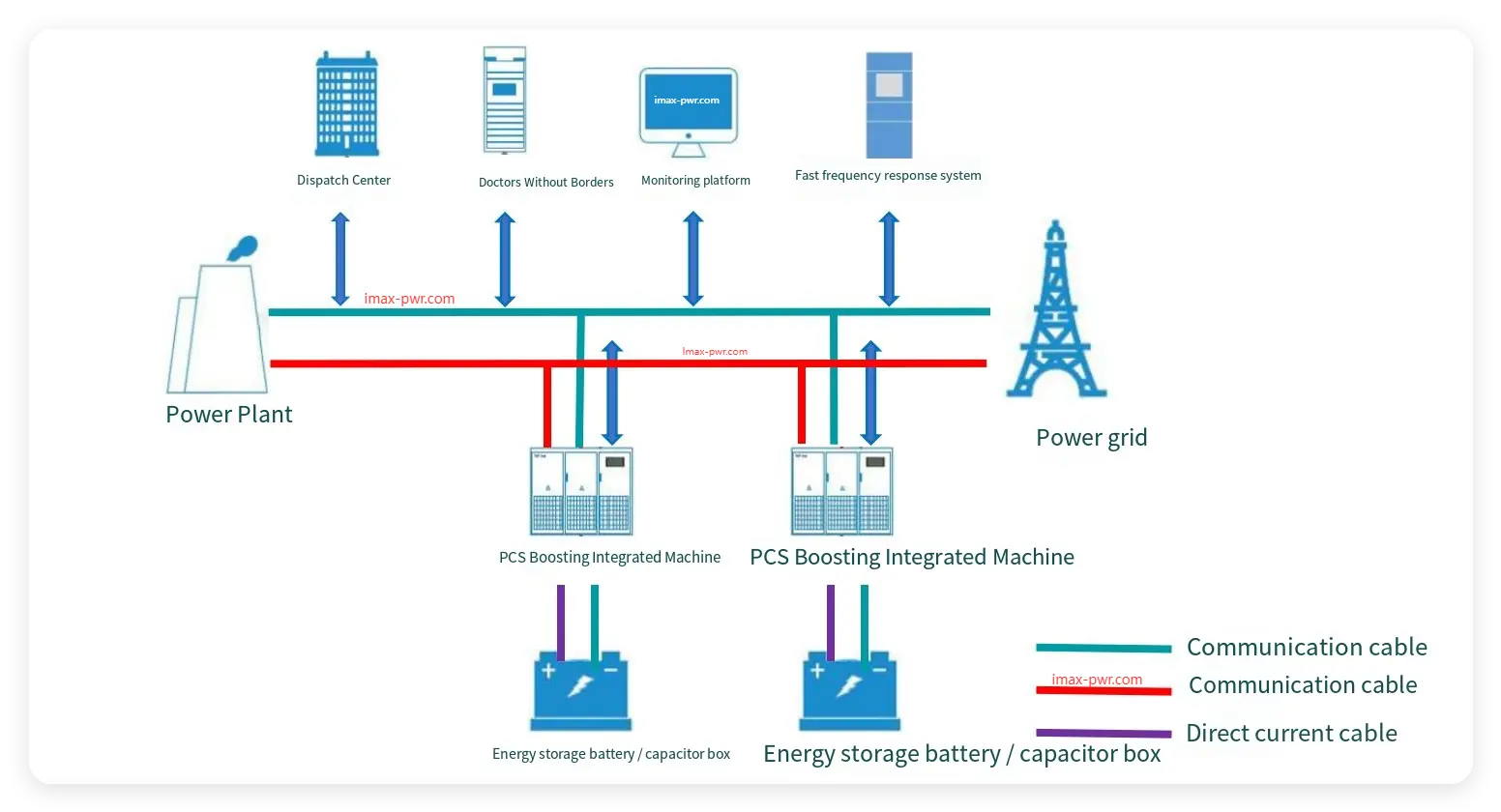
- High-Rate Parallel Topology: Multi-PCS parallel structure supports high-power rapid response and flexible scheduling. This enhances system scalability and adaptability.
- Energy Path: DC bus dynamic stability. Optimize bus voltage fluctuations for quick energy exchange and system stability. Stable energy paths ensure efficient operation.
- Access Mode: Bidirectional power flow control. Enable rapid charging and discharging switching to improve primary frequency regulation response capability.
- Response Logic
- Millisecond-Level Power Response: Control algorithm optimization achieves millisecond-level power regulation. Fast response times are critical for frequency regulation.
- Tuning Strategy
- SOC Dynamic Balance Control: Dynamically adjust each battery cluster’s SOC to prevent overcharge and over-discharge. This protects battery life and ensures safe operation.
- Algorithm Optimization
- Model Predictive Control (MPC): Combine grid frequency prediction for ultra-fast closed-loop response. Predictive control enhances system responsiveness and accuracy.
Equipment Layer
- Core Characteristics: High-rate core selection. Use cores above 10C level to support high-power instantaneous discharge. High-rate cores enable quick energy release.
- Power Conversion: High-speed bidirectional PCS. High-response DSP control meets high-power rapid switching requirements. Efficient power conversion is vital for system performance.
- Electrical Interface: Low-impedance busbar design. Reduce current fluctuation losses to improve system efficiency and stability. Optimal electrical interfaces minimize energy waste.
Safety and Operation & Maintenance Layer
- Thermal Management: Intelligent liquid cooling system. Efficient cooling handles heat stress from high-rate discharge. Effective thermal management ensures system reliability.
- Battery Protection: Multi-level BMS protection. Real-time monitoring and graded protection ensure safe operation. Comprehensive protection safeguards batteries.
- Fault Monitoring: High-frequency sampling diagnosis. Detect abnormal current fluctuations through high-frequency sampling for early warning. Early fault detection prevents system failures.
- Data Management: Cloud terminal monitoring and operation. Real-time data upload and analysis enable remote optimization scheduling. Cloud-based management enhances operational efficiency.
- Performance Evaluation: Tuning performance self-learning. The system optimizes tuning response strategies through data iteration. Self-learning capabilities improve system performance over time.