
7 Key Design Factors That Determine the Success of Your PV-Storage-Diesel Hybrid Microgrid
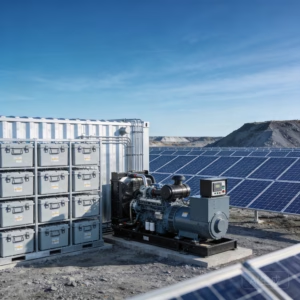
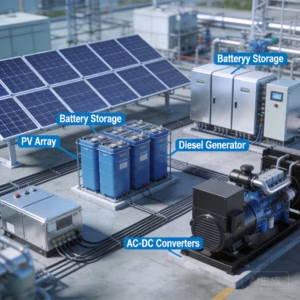
As the world accelerates its transition toward renewable energy, hybrid microgrids combining solar photovoltaic (PV), battery energy storage, and diesel generator backup—commonly referred to as PV-storage-diesel hybrid systems—have emerged as one of the most reliable solutions for off-grid and remote-area power supply. For mining operations, island communities, industrial facilities located far from centralized grids, and emergency backup power applications, this hybrid architecture offers the perfect balance between sustainability, reliability, and economic viability.
In this article, we’ll examine the seven critical design factors that can make or break your PV-storage-diesel hybrid microgrid project. Drawing from decades of engineering experience in the industry, Imaxpower has compiled these essential insights to help project developers and operators avoid common pitfalls and maximize return on investment.
1. Proper Load Profiling and Accurate Demand Forecasting
The foundation of any successful microgrid design begins with understanding exactly how much power is needed, and when it’s needed. Many projects fail not because of component failures, but because the initial load assessment was inaccurate. Seasonal variations, daily consumption patterns, future expansion plans, and peak demand requirements all need to be carefully analyzed.
For industrial applications such as mining operations, the load profile can vary dramatically between day shifts and night shifts, and between different operational modes. A proper PV-storage-diesel design must accommodate these fluctuations without compromising reliability or unnecessarily inflating capital costs. At Imaxpower, we typically recommend collecting at least two weeks of continuous load data before finalizing the system sizing.
2. Optimal PV Penetration Level Balance
One of the most common questions we encounter is: “What percentage of our energy should come from solar?” While maximizing solar penetration reduces fuel costs and carbon emissions, too much PV can create challenges for system stability, especially when combined with diesel generator operation. The optimal penetration level typically falls between 30% and 60% for most off-grid applications, depending on the load profile and storage capacity.
Higher penetration requires larger battery storage capacity to handle intermittency and overnight operation, which increases upfront capital expenditure. The key is finding the economic sweet spot where fuel savings offset the additional investment in solar panels and batteries. This balance requires sophisticated modeling and years of practical experience to get right.
3. Battery Sizing and Chemistry Selection
The battery energy storage system is the “heart” of a PV-storage-diesel hybrid microgrid, enabling PV firming, peak shaving, and uninterrupted power supply during cloudy periods or at night. Choosing the right battery capacity and chemistry is crucial for long-term project economics.
Lithium-ion batteries dominate new installations today due to their high energy density, long cycle life, and declining costs. However, lead-acid batteries still have a role in smaller, low-cycling applications. The required battery capacity depends on several factors: desired autarky (days of autonomy without PV or diesel), depth of discharge limits, desired battery life, and whether the system is designed for peak shaving or full off-grid operation.
For most commercial projects today, we recommend lithium iron phosphate (LFP) batteries due to their excellent safety record, long cycle life, and better performance at high temperatures compared to other lithium chemistries.
4. AC vs. DC Coupling Architecture Selection
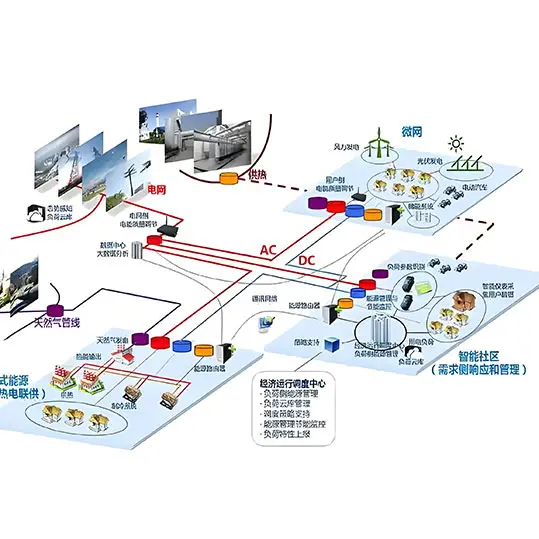
The choice between AC-coupled and DC-coupled architecture fundamentally affects how your PV-storage-diesel system operates. DC-coupled systems connect PV directly to the battery through a DC-DC charger, offering higher efficiency for charging the battery from PV. AC-coupled systems, on the other hand, use separate inverters for PV and storage, offering more flexibility in system sizing and easier expansion.
In PV-storage-diesel hybrid applications, AC-coupled architectures have gained popularity because they allow each component to operate at its own optimal point and provide better frequency stability when multiple diesel generators are operating alongside renewable generation. However, DC-coupled systems can offer slightly higher round-trip efficiency for PV-to-battery operation.
The “best” architecture depends on your specific project requirements, site conditions, and long-term expansion plans. There’s no one-size-fits-all answer, which is why experienced engineering support like that provided by Imaxpower is so valuable.
5. Generator Sizing and Control Strategy Integration
In a PV-storage-diesel hybrid system, the diesel generator plays a fundamentally different role than it does in a traditional diesel-only system. Instead of running continuously, it typically only operates when battery state-of-charge drops below a predetermined threshold, during prolonged cloudy weather, or for carrying extreme peak loads.
This intermittent operation pattern requires careful consideration of generator sizing and control logic. Oversized generators operating at low loads suffer from wet stacking and reduced efficiency, while undersized generators can’t handle sudden peak demands when PV output drops unexpectedly. Modern control systems use sophisticated algorithms to minimize generator runtime while maintaining adequate battery charge and system stability.
An optimized control strategy can significantly reduce fuel consumption and generator maintenance costs, extending engine life and improving overall project economics. The integration between PV inverter controls, battery management systems, and generator automatic start/stop controls must be carefully coordinated.
6. Climate and Environmental Considerations
Environmental conditions have a major impact on microgrid performance that is often underestimated during the design phase. High ambient temperatures reduce both PV panel output and battery capacity, while also accelerating battery degradation. In dusty environments, soiling reduction on PV panels can be significant without proper maintenance planning.
For coastal sites, salt corrosion resistance is essential for all electrical equipment. In colder climates, battery heating systems may be required to maintain performance and prevent damage. Altitude affects both PV output and diesel generator efficiency. All of these factors need to be incorporated into the design from day one.
At Imaxpower, we always conduct a site-specific environmental assessment before finalizing the system design, ensuring that all components are properly specified for the local conditions.
7. Redundancy, Maintainability, and Future Expansion
A microgrid is a long-term investment that should provide reliable service for 20 years or more. Designing for maintainability and including appropriate redundancy for critical components avoids costly outages down the road. Modular design allows for phased deployment and easier expansion as load demand grows over time.
Considerations include availability of spare parts, accessibility for maintenance, training requirements for local operating staff, and documentation quality. A well-designed system should be able to accommodate increases in load demand by adding more PV panels, batteries, or even additional generators without requiring complete rewiring or replacement of core components.
Conclusion: Getting Your PV-Storage-Diesel Project Right
Building a reliable and cost-effective PV-storage-diesel hybrid microgrid requires careful attention to detail at every stage of the design process. By properly addressing these seven key factors—load profiling, PV penetration, battery selection, architecture choice, generator integration, environmental adaptation, and long-term maintainability—you dramatically increase the chances of project success.
As organizations around the world continue to decarbonize their operations and expand access to electricity in remote areas, PV-storage-diesel hybrid systems will play an important role in the global energy transition. They offer a proven pathway to reducing fuel consumption, lowering carbon emissions, and improving power quality compared to traditional diesel-only generation, while still maintaining the reliability that critical operations require.
At Imaxpower, we specialize in designing and building customized PV-storage-diesel hybrid microgrid solutions tailored to your specific project requirements. Our engineering team has decades of combined experience in renewable energy and power systems integration, ensuring that your project is delivered on time, on budget, and meets all performance expectations from day one.
About Imaxpower
Imaxpower is a leading provider of integrated energy storage and microgrid solutions for industrial, commercial, and utility-scale applications. We work with project developers, EPC contractors, and end-users around the world to deliver reliable, efficient, and sustainable power systems.
If you’re planning a microgrid project and need professional engineering support or a complete turnkey solution, we’d love to hear from you. Contact our team today to discuss your project requirements:
📞 Phone: +86-19066355917
📧 Email: lee@imaxpwr.com
Send us your inquiry and our engineering team will get back to you with a customized solution that meets your needs and budget.