

6 Emerging Trends Shaping the Future of Hybrid Microgrids in 2026
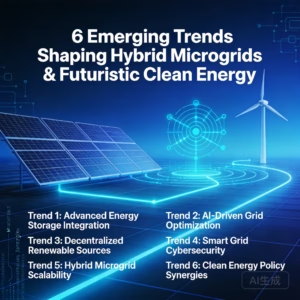
The global energy landscape is undergoing a profound transformation, and hybrid microgrids are at the center of this revolution. As remote industrial operations, mining projects, and off-grid communities continue to grow, the demand for reliable, clean, and cost-effective power solutions has never been higher. In 2026, we’re seeing several key trends that are redefining how hybrid microgrids are designed, operated, and optimized. This article explores six of the most impactful trends that industry professionals need to know about.
1. Higher Penetration of Renewable Energy with Improved Storage Integration
One of the most significant trends in 2026 is the push for higher renewable penetration in microgrid systems. Where traditional hybrid microgrids might have relied on diesel generators for baseload power, modern designs are now achieving 70%+ renewable penetration through better integration of solar PV and battery energy storage systems. This shift isn’t just about sustainability—it’s also about economics. With solar panel costs continuing to decline and battery costs dropping below $100/kWh for utility-scale installations, the case for high renewable penetration has become irresistible for most project developers.
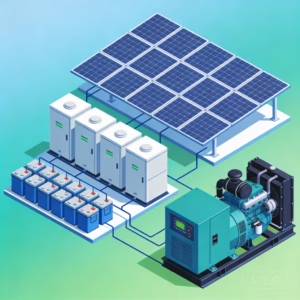
Imaxpower has been at the forefront of this trend, engineering hybrid microgrids that maximize solar utilization while maintaining grid stability through advanced battery management systems. The key isn’t just adding more solar—it’s integrating it intelligently with storage and backup generation to ensure reliability even during extended periods of low irradiance.
2. Advanced AI and Predictive Optimization
Artificial intelligence is no longer a buzzword in the microgrid industry—it’s becoming a standard feature in modern control systems. In 2026, leading microgrid operators are using AI-powered predictive control to optimize energy dispatch, forecast load requirements, and extend the lifespan of battery systems. These systems analyze historical data, weather forecasts, and real-time load patterns to make minute-by-minute decisions that maximize efficiency and minimize fuel consumption.
The results speak for themselves: field deployments have shown fuel savings of 10-15% compared to traditional rule-based control systems, translating directly into lower operating costs for project owners. For remote mining operations where fuel transportation costs can be extremely high, these savings can make the difference between a profitable project and a losing one.
3. Modular and Scalable Design Approaches
Gone are the days when microgrids had to be designed and built for full capacity from day one. Today’s trend is toward modular, scalable designs that allow project owners to start with a smaller system and expand incrementally as demand grows. This approach significantly reduces upfront capital expenditure and allows projects to begin generating revenue sooner.
Modular design also improves reliability—if one module requires maintenance, the rest of the system can continue operating without interruption. Imaxpower has embraced this approach in many recent projects, designing containerized microgrid solutions that can be easily transported to remote sites and expanded with additional power modules as needed.
4. Focus on Circular Economy and Battery Second Life
As the first generation of utility-scale battery energy storage systems reaches end-of-life, the industry is increasingly focused on circular economy principles. In 2026, we’re seeing more projects that repurpose electric vehicle batteries for stationary energy storage applications in microgrids. While these batteries may no longer meet the stringent requirements for EV use, they still have 70-80% of their original capacity remaining—perfect for stationary microgrid applications where space and weight are less critical.
This trend isn’t just about environmental responsibility—it also makes economic sense. Second-life batteries are available at significantly lower costs than new batteries, making energy storage more accessible for small to medium-sized microgrid projects. At the same time, the industry is developing better recycling programs to ensure that batteries can be properly processed at the end of their second life.
5. Enhanced Grid Resilience and Black Start Capabilities
With increasing frequency of extreme weather events and aging centralized grid infrastructure, resilience has become a top priority for both off-grid and grid-tied microgrid projects. In 2026, modern hybrid microgrids are designed with enhanced black start capabilities and islanding operation that allows them to continue operating even when the main grid goes down. This capability is particularly critical for critical infrastructure projects such as mining operations, remote communities, and industrial facilities where downtime can result in significant financial losses.
Key to this enhanced resilience is the development of advanced inverters that can provide grid-forming capabilities without relying on synchronous generators. These advancements allow battery systems to provide voltage and frequency support, improving overall system stability and reducing reliance on spinning reserve from diesel generators.
6. Digital Twin Technology for Lifecycle Management
Digital twin technology is another trend that’s gaining traction in 2026. By creating a digital replica of the physical microgrid system, engineers and operators can simulate different operating scenarios, test control strategies, and identify potential issues before they cause problems. During the design phase, digital twins help optimize system sizing and component selection. During operation, they enable predictive maintenance, helping operators identify failing components before they cause unexpected downtime.
This technology has been particularly valuable for remote microgrid projects where access for maintenance is limited and expensive. By predicting maintenance needs in advance, operators can schedule service visits during planned downtime, avoiding costly unplanned outages.
Conclusion: The Path Forward for Hybrid Microgrids
The hybrid microgrid industry has come a long way in just a few years, and these six trends are driving continued innovation and adoption. From higher renewable penetration enabled by better storage to AI optimization and digital twin technology, 2026 is seeing the industry mature from experimental projects to mainstream, bankable solutions. As costs continue to decline and technology improves, we can expect hybrid microgrids to play an increasingly important role in the global energy transition.
Whether you’re planning a new remote mining project, developing an off-grid community, or looking to improve the reliability of your existing power infrastructure, a well-designed hybrid microgrid from an experienced engineering partner can deliver significant benefits in terms of cost, reliability, and sustainability.
Looking to engineer a reliable hybrid microgrid solution for your remote project? Contact Imaxpower today for expert consultation and customized engineering solutions. Our experienced team has delivered successful microgrid projects around the world, combining cutting-edge technology with proven engineering practices to ensure long-term performance and reliability.
Contact: Coco
Phone: +86-13760212825
Email: info@imaxpwr.com
We welcome your inquiry and look forward to discussing how we can help bring your microgrid project to life.